Goblet Squat: The Simple Strength Move That Builds Real Legs, Hips, and Core
Goblet Squat: The Simple Strength Move That Builds Real Legs, Hips, and Core
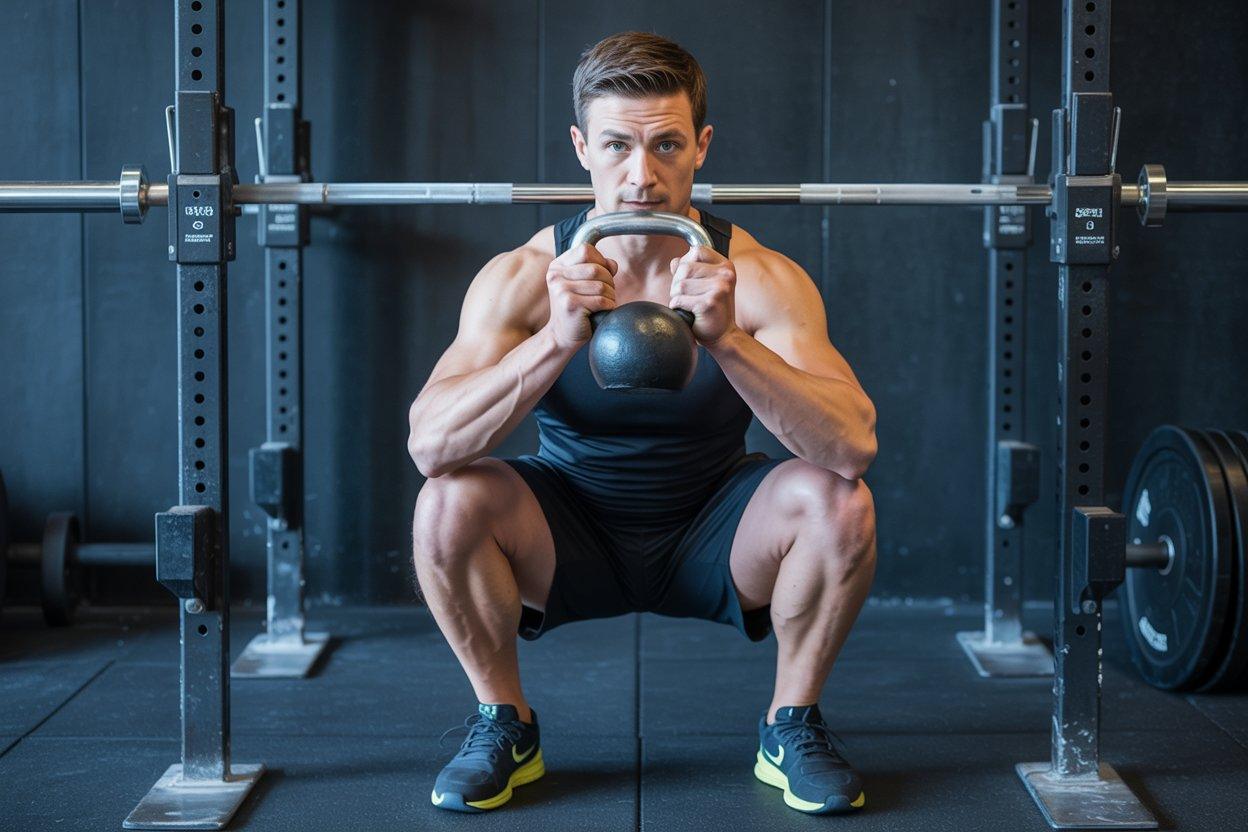
The goblet squat is one of the cleanest ways to learn a strong squat pattern. You hold one weight close to your chest, sit down with control, then stand up with power. That front hold keeps your chest tall and your core tight. It also makes depth feel smoother for many bodies. This guide walks you through goblet squat form, the best variations like the heel elevated goblet squat, and how to pick between a kettlebell goblet squat and a dumbbell goblet squat. You will also learn the goblet squat muscles worked, common errors, and simple progress steps that keep your training moving.
What is a goblet squat?
If you are asking what is a goblet squat, it is a squat where the weight sits in front of your body like a cup. You hold a kettlebell by the horns or a dumbbell by one end. The weight stays close to your chest as you squat down and stand up. That simple position helps you stay upright and stable. Many people find it easier to learn and easier to repeat with clean reps. It also turns your core on automatically, because your body has to stay tight to keep the weight from pulling you forward.
Why people love this lift
The goblet squat benefits are easy to feel. Your legs work hard, your hips open up, and your core stays active. It is also flexible. You can use light weight to master form or heavier weight to build strength. You can make it more quad-focused with a heel raise or shift the feel by changing your stance. It fits home workouts, gym sessions, and warm-ups. That’s why so many coaches keep it in programs for a long time.
Goblet Squat Benefits You’ll Notice Fast
The goblet squat builds strength while keeping the movement simple. The weight sits in front, so your torso stays taller than many other squat styles. That usually means cleaner reps, better balance, and less drifting forward. It also helps many people reach a deeper squat without feeling stuck. The core stays switched on because it must hold your ribs and pelvis steady during each rep. When you train goblet squats often, you also improve your squat rhythm. Your hips and knees learn to move together, which makes the pattern feel natural. Another big win is control. You can slow down the descent, pause at the bottom, and build strong positions that carry over to other leg exercises.
- Cleaner squat pattern: Upright posture feels easier to maintain when the load stays close.
- Strong legs and hips: Quads and glutes get steady work through a full range.
- Core strength: You brace every rep, which trains stability without extra moves.
- Easy setup: One weight, small space, quick sessions that still feel high quality.
Goblet Squat Muscles Worked (And What You’ll Feel)
People search goblet squat muscles worked because this lift does more than “just legs.” Your quads drive the push as you stand up. Your glutes help extend your hips and keep your knees stable, especially when you squat deep. Your inner thighs work hard too, because they help control the bottom position and pull you back out of the hole. Your core is a major player. Abs and obliques keep your torso steady so the weight does not drag you forward. Your upper back also stays active, since you are holding load against your chest. If your quads burn first, that is normal. If your glutes feel dominant, your stance and depth may be shifting. Both are fine when your form stays solid.
| Muscle Group | Main Job During the Goblet Squat | What You Usually Feel |
|---|---|---|
| Quads | Extend knees and drive you up | Front thigh burn, especially with heel elevation |
| Glutes | Extend hips and stabilize knees | Strong squeeze near the top and deep positions |
| Adductors | Control deep range and help you stand | Inner thigh tension, more in wider stances |
| Core | Brace torso and keep ribs stacked | Firm midsection, better posture across reps |
| Upper back | Hold shoulders steady and support the load | Upper back tightness from staying tall |
Goblet Squat Form: Step-by-Step That Works
Clean goblet squat form starts before you even squat. Stand tall with feet around shoulder width and toes slightly out. Hold the weight tight to your chest so it feels “glued” there. Take a belly breath and brace your core, then start the descent slowly. Let your knees move as your hips drop down between your legs. Keep your heels heavy and your chest proud. At the bottom, pause for a brief second if you can stay stable. Then push the floor away and stand up strong. If your elbows drift forward, pull them back closer to your ribs. If your heels lift, try slowing down or using a small heel wedge. Strong goblet squat reps look smooth and controlled from start to finish.
| Step | What to Do | Quick Self-Check |
|---|---|---|
| 1) Stance | Feet shoulder width, toes slightly out | Knees track with toes |
| 2) Hold | Weight tight to chest, elbows down | Weight never floats forward |
| 3) Brace | Big belly breath, ribs stacked | Midsection feels firm |
| 4) Down | Slow squat, sit between legs | Heels stay heavy |
| 5) Up | Push floor away, stand tall | No knee collapse |
Goblet Squat Exercise Demonstration Cues (Simple and Clear)
Many people type goblet squat exercise demonstration because they want quick cues that make sense. Here are cues that work instantly. “Keep the weight glued to your chest” stops you from tipping forward. “Ribs down, belly tight” keeps your core working and protects your back. “Knees follow toes” keeps your legs aligned and strong. “Slow down on the way down” fixes rushed reps and helps you stay balanced. “Push the floor away” keeps the rise smooth. If you want an easy test, film one set from the side. Look for a tall torso and a steady weight position. Film from the front for knee tracking. Fix one thing at a time. Clean reps build faster progress than messy reps.
Kettlebell Goblet Squat vs Dumbbell Goblet Squat
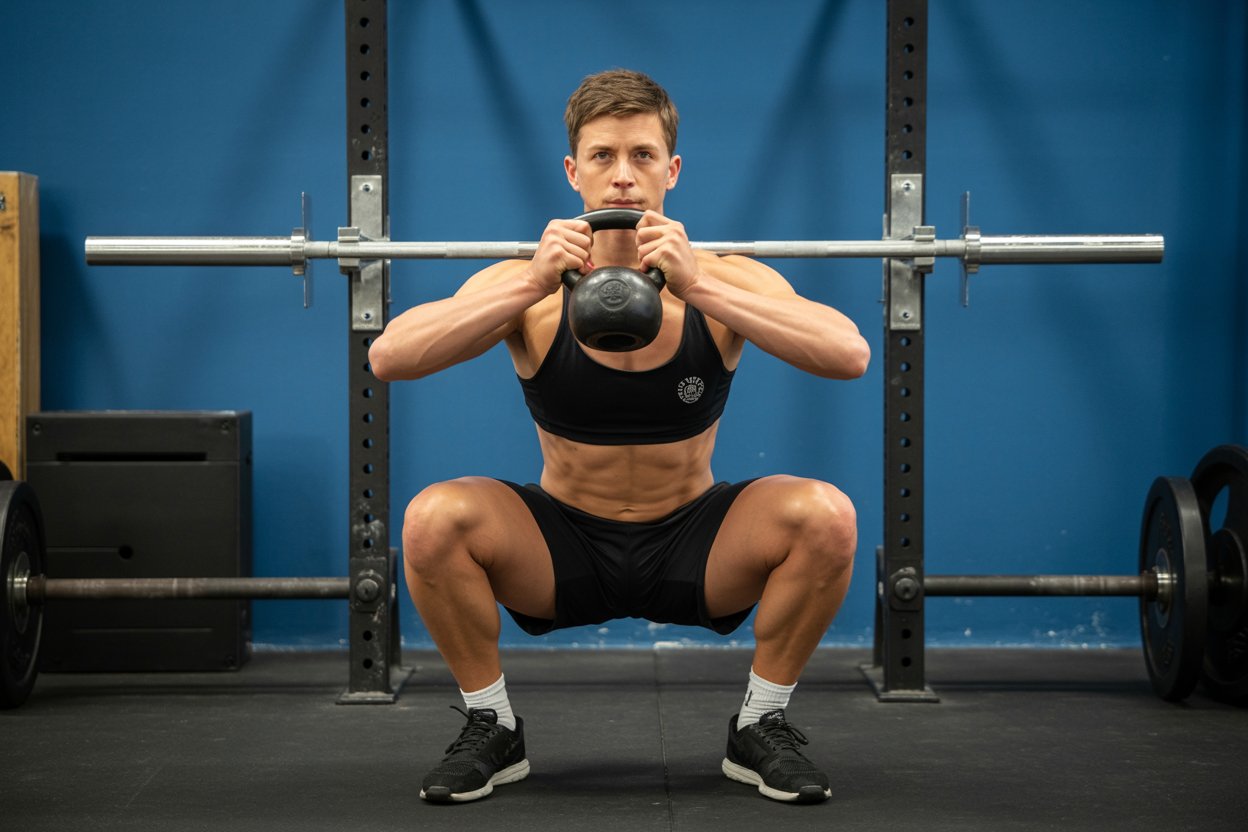
A kettlebell goblet squat and a dumbbell goblet squat both train the same squat pattern, but the hold feels different. With a kettlebell, you grip the horns, and the weight often sits comfortably near your chest. Many people find the wrists feel better with this setup. With a dumbbell, you usually hold one end like a cup. It is easy to load because dumbbells are everywhere, and it works well for most gyms. The best choice is the one that lets you keep a tight brace and tall posture. If the dumbbell digs into your hands or feels unstable, switch to a kettlebell. If you do not have a kettlebell, a dumbbell works perfectly. Form always comes first.
| Option | Feels Like | Best For | Quick Tip |
|---|---|---|---|
| Goblet squat kettlebell | Stable horn grip, smooth hold | Comfort, posture, steady reps | Keep wrists straight, elbows tucked |
| Goblet squat dumbbell | Cup hold, easy access | Most gyms, easy loading | Hold vertical and tight to chest |
Goblet Squat With Dumbbell: Safe Hold and Smooth Reps
A goblet squat with dumbbell works best when the hold feels secure. Use the cup hold by supporting one end of the dumbbell with both hands. Keep it vertical and close to your chest. Your elbows point down and slightly forward, not flared wide. Keep your grip firm, but do not crush so hard that your shoulders tense up. If the dumbbell is too large or awkward, the rep quality drops fast. In that case, use a smaller dumbbell and slow the tempo, or switch to a kettlebell. A solid goblet squat dumbbell setup should feel stable through the entire set. If the weight starts drifting forward, stop and reset. Tight hold, tight core, calm reps.
Goblet Squat With Kettlebell: Grip, Elbows, and Balance
A goblet squat with kettlebell is often the most comfortable variation. Hold the kettlebell by the horns with both hands. Keep it close to your chest so the load does not pull you forward. Tuck your elbows near your ribs and keep your chest tall. If your upper body starts collapsing when you go heavier, the load is too much for your brace right now. Drop the weight and make the reps cleaner. A steady kb goblet squat is all about control on the way down. Slow descent, strong pause, then a smooth rise. If you want a quick upgrade, add a one-second pause at the bottom. That builds better positions and makes the set feel more serious without needing extreme weight.
Heel Elevated Goblet Squat: Deeper Squats and Stronger Quads
The heel elevated goblet squat is a powerful option when depth feels limited or your quads need extra work. Elevating the heels makes it easier for knees to travel forward, which helps many people stay upright and reach a deeper squat. Use a small plate, wedge, or slant board. Keep the elevation modest at first so your feet stay stable. Then squat with the same goblet squat form rules. Do not let your toes lift or your knees cave in. You should feel a strong quad burn without sharp joint discomfort. If it feels rough, reduce the heel height or slow the tempo. This variation is simple, but it can deliver a big training effect quickly when done with clean control.
Elevated Goblet Squat: Two Smart Elevation Setups
An elevated goblet squat can mean more than one setup. The first is heel elevation, which shifts the squat to a more upright, quad-focused pattern. The second is using a box or bench to guide depth. A box target can help you repeat the same depth every rep, which builds confidence fast. Touch the box lightly, then stand up. Do not slam down or relax at the bottom. The goal is control, not collapse. Elevation should always feel stable. Avoid shaky surfaces. If you cannot keep your balance, keep it basic and perfect your standard goblet squat first. Then add elevation later for variety and new progress.
Goblet Squat vs Sumo Squat: What Changes and Why It Matters
The goblet squat vs sumo squat comparison is about stance and muscle feel. A classic goblet squat uses a shoulder-width stance with a mild toe angle. It often hits quads and glutes in a balanced way while keeping the torso upright. A sumo squat uses a wider stance with toes turned out more, and it often shifts the load toward inner thighs and glutes. If your hips feel pinched in a narrower stance, a wider stance can feel smoother. If you want clean squat mechanics, the standard goblet squat is a strong base. If you want extra inner thigh focus, try a sumo stance while still holding the weight goblet-style. Both can work well, and many people do best by rotating them through the week.
Sumo Goblet Squat: How to Do It Clean and Strong
A sumo goblet squat adds a wider stance while keeping the same front-loaded hold. Start wider than shoulder width, turn toes out, and brace your core. As you squat down, push your knees out so they follow the line of your toes. Drop your hips between your legs, not behind them. Keep the weight close to your chest and your torso tall. If your knees feel stressed, the stance may be too wide or your toes are turned out too far. Bring the stance in a bit and repeat. Many people rush this variation and lose control. Slow the descent and pause briefly at the bottom. Clean reps keep the movement safe and make the muscles do the real work.
Common Goblet Squat Form Mistakes and Fast Fixes
Most goblet squat issues come from small habits that stack up. A big one is letting the weight drift away from your chest. That pulls you forward and makes your back work too much. Keep the load tight and elbows down. Another issue is heels lifting, which often comes from tight ankles or rushing. Slow the descent and try a small heel lift if needed. Knee collapse is also common. Keep pressure through your whole foot and drive knees in line with toes. Some people bounce at the bottom and lose control. Add a short pause so you stay solid. Another mistake is weak bracing. Take a belly breath and tighten your core before every rep. Fix one thing at a time, and the goblet squat will feel smoother fast.
| Mistake | What It Looks Like | Fix That Works |
|---|---|---|
| Weight drifts forward | Torso folds, balance feels shaky | Keep weight glued to chest, elbows down |
| Heels lift | Toes do all the work, depth feels stuck | Slow descent, try heel elevated goblet squat |
| Knees cave in | Knees collapse on the way up | Drive knees with toes, keep full-foot pressure |
| No brace | Lower back arches, ribs flare | Belly breath, tighten core before each rep |
| Rushed reps | Fast drop, sloppy bottom position | 3-second down tempo, 1-second pause |
How to Progress the Goblet Squat Without Getting Stuck
Many people only progress the goblet squat by adding weight, then they stall. You have better tools. Add range first by working toward a deeper, stable squat. Add tempo next by lowering for three seconds. Add pauses at the bottom to build strength in the hardest position. Add reps before adding load. If your grip limits you, switch from dumbbell to kettlebell or use a more comfortable hold. You can also rotate variations. Use a standard goblet squat on one day and a heel elevated goblet squat on another day. Keep your tracking consistent, keep your brace strong, and keep the weight close. Progress that stays clean lasts longer and keeps your joints happy while your legs get stronger.
- Depth: Aim for a smoother bottom position with no heel lift.
- Tempo: 3 seconds down makes light weight feel serious.
- Pause: Hold the bottom for 1–2 seconds without collapsing.
- Reps: Build from 8 to 12 reps before adding load.
- Variation: Rotate heel elevation and standard reps for steady gains.
Marching Glute Bridge: The Best Partner Move for Stronger Squats
The marching glute bridge pairs perfectly with goblet squats because it builds hip control and stability. Lie on your back with knees bent and feet flat. Brace your core and lift hips until your body forms a straight line from shoulders to knees. Keep hips steady, then lift one knee up slightly like a march. Place it down and switch sides. Go slow and keep your pelvis level. If one hip drops, reduce the range and tighten your core more. You should feel glutes working hard, not your lower back. This drill helps your knees track better during squats because your hips learn to stay strong and steady. Use it as a warm-up before goblet squats or as a finisher after training when your glutes need extra attention.
Training Plans: Beginner, Muscle, and Strength
A good plan makes the goblet squat feel simple and effective. For beginners, train it 2 to 3 times each week. Do 3 sets of 8 to 12 reps with clean form and steady control. Rest about a minute between sets. For muscle growth, use 3 to 4 sets of 10 to 15 reps and slow the descent. That keeps tension on the legs and makes the reps feel deep and controlled. For strength focus, do 4 to 5 sets of 6 to 8 reps with a heavier weight, but keep posture tall and stable. If your form breaks, reduce the load and rebuild. Keep tracking reps and load each week. Small improvements, repeated often, create big results over time.
| Goal | Sets × Reps | Rest | Best Style |
|---|---|---|---|
| Beginner skill + strength | 3 × 8–12 | 60–90 sec | Standard goblet squat, slow descent |
| Muscle growth | 3–4 × 10–15 | 60–90 sec | Tempo reps, short pause at bottom |
| Strength focus | 4–5 × 6–8 | 90–120 sec | Heavier weight, strict posture |
| Quad focus | 3–4 × 8–12 | 60–90 sec | Heel elevated goblet squat |
Quick Checklist for Your Next Set
Use this quick checklist to lock in your goblet squat form before each set. Keep the weight tight to your chest and stay calm during the descent. Keep heels heavy and knees tracking with toes. Brace your core with a belly breath and keep your ribs stacked so your torso stays tall. Slow reps usually fix most problems without adding any extra gear. If depth is hard, use a small heel lift and build comfort there first. If your knees drift inward, spread the floor with your feet and keep pressure through your whole foot. Clean reps feel smooth, stable, and repeatable. When you can repeat the same strong rep again and again, that is when your squat starts building real results.
FAQs
1) What is a goblet squat?
A goblet squat is a squat where you hold one weight close to your chest. The front load helps you stay upright and makes it easier to learn a clean squat pattern. It trains legs, hips, and core in one simple move.
2) What is the best goblet squat form tip?
The best goblet squat form tip is to keep the weight glued to your chest and brace your core before every rep. When the weight stays close and your midsection stays tight, the squat feels smoother and stronger.
3) Dumbbell goblet squat or kettlebell goblet squat?
A dumbbell goblet squat is easy to do in most gyms. A goblet squat kettlebell grip often feels more comfortable for wrists and elbows. Choose the option that keeps your posture tall and your reps stable.
4) What muscles are worked in a goblet squat?
The goblet squat muscles worked include quads, glutes, and inner thighs. Your core and upper back also work hard because you are holding the load in front and staying upright during each rep.
5) Is a heel elevated goblet squat good for quads?
Yes, the heel elevated goblet squat often increases quad work because it lets knees travel forward more while keeping your torso upright. Start with small elevation and keep your foot pressure steady.
6) Goblet squat vs sumo squat: which is better?
The goblet squat vs sumo squat choice depends on comfort and goal. Standard stance feels balanced for quads and glutes. Wider sumo stance often hits inner thighs and glutes more. Rotate both if they feel good.
Final Words
The goblet squat is simple, but it can upgrade your training quickly. It builds strong legs, stable hips, and a tighter core while teaching a clean squat pattern that many people can repeat with confidence. Use a dumbbell or kettlebell, slow the descent, and make every rep look the same. If depth is hard, use a heel lift and build strength there first. If you want more glute control, add the marching glute bridge to your routine. Stick with one plan for four weeks and track your reps. Small wins each week turn into big changes in how your squat feels and how your legs look.