Perfect Medium Rare Steak Temp: The Only Guide You Will Ever Need
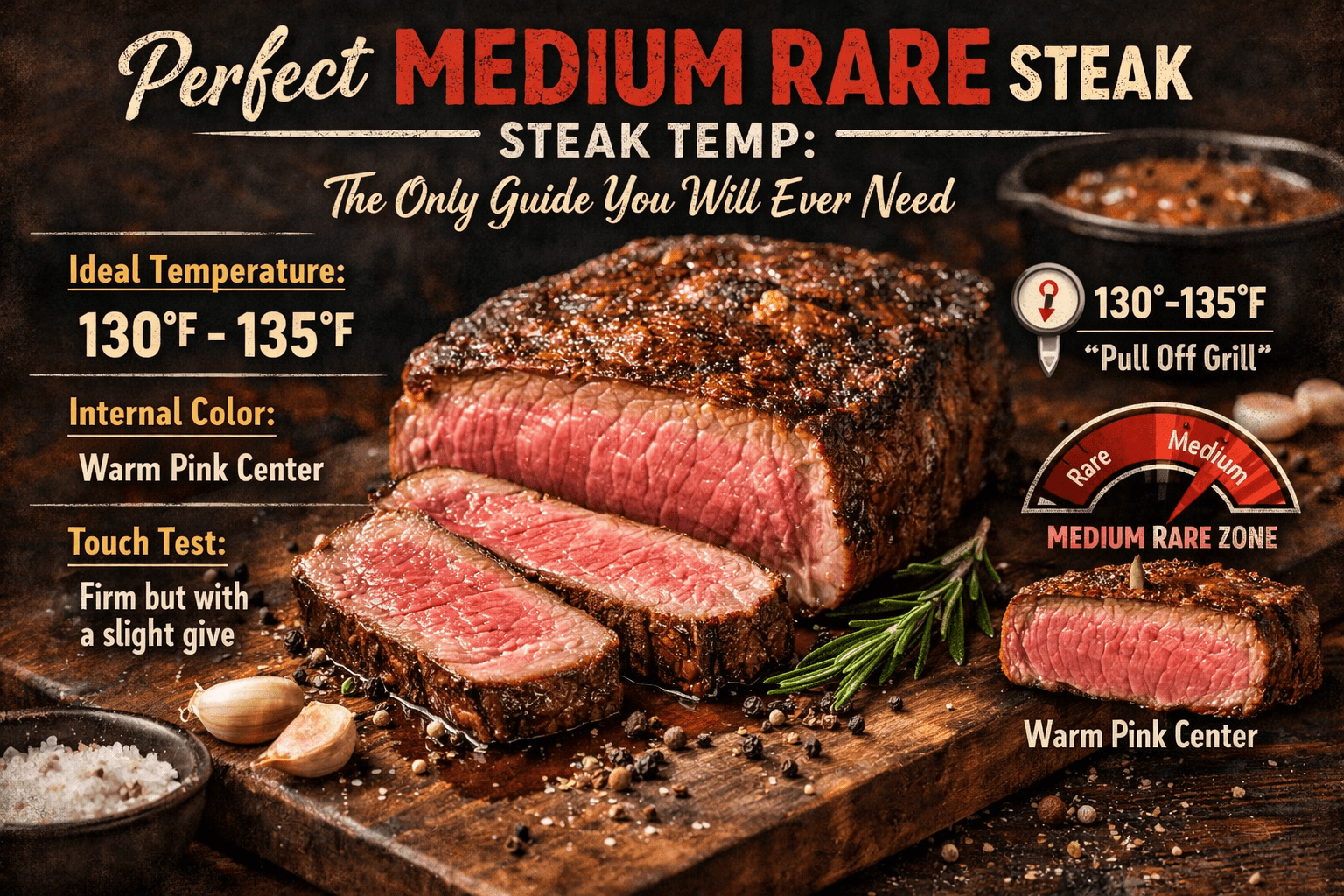
The Secret to the Perfect Medium Rare Steak Temp (It’s Not a Guess)
We have all been there. You spend good money on a beautiful steak. You season it with love. You hear that satisfying sizzle as it hits the pan. But then comes the terrifying part: the waiting. You cut into it, hoping for that perfect, warm, rosy center. Instead, you get a piece of meat that is either mooing at you or tough enough to use as a shoe sole.
I have ruined more steaks than I care to admit. I used to rely on the “finger test,” pressing the meat to see if it felt like the fleshy part of my hand. Spoiler alert: my hands do not cook at consistent temperatures. It was a disaster.
The good news? You do not need a culinary degree to fix this. You just need one thing: the medium rare steak temp. This number, between 130°F and 135°F, is the magic ticket to steakhouse-quality beef right in your own kitchen.
Forget the fancy jargon. Cooking the perfect steak comes down to science, not luck. In this guide, we are going to throw away the guesswork. We will look at why medium rare is the gold standard, exactly when to pull your steak off the heat, and how to avoid the “gray band” of death. By the end, you will cook a steak that makes your neighbors jealous.
Let’s dial in that medium rare temp and never eat a dry steak again.
Why 130°F Changes Everything
You might wonder why chefs obsess over the medium rare steak temp. Why not just cook it all the way through? The answer lies in the fat.
Beef fat is solid when it is cold. If you eat a raw steak (rare), the fat has not had a chance to soften. It feels waxy in your mouth. If you blast the steak to well done, the fat melts out completely. It drips away into the pan, and you are left with dry, stringy protein.
Medium rare temp is the sweet spot. At 130°F to 135°F, the fat renders just enough to become liquid gold. It bastes the muscle fibers from the inside. This is what gives you that “buttery” texture. It is not just about the color; it is about the mouthfeel.
Furthermore, this temperature keeps the meat juicy. Steak is made up of water and protein. When the internal temperature passes 140°F, the muscle fibers squeeze together tightly. They literally wring out the moisture like a wet sponge. By keeping your steak at medium rare temp, you keep that sponge loose and full of flavor.
The Carryover Cooking: Your Secret Weapon
Here is the mistake 90% of home cooks make. They pull the steak off the grill when the thermometer reads 135°F. They slice it immediately, and all the blood (actually, it is myoglobin, not blood) runs out onto the cutting board. The steak is now medium, not medium rare.
This is called carryover cooking. When a hot steak rests, the heat trapped in the outer layers continues to travel inward. The internal temperature will rise.
If you want a final medium rare temp of 130°F, you must remove the steak at 125°F. Yes, it will look undercooked on the pan. Trust the process. Let it rest on a cutting board or a warm plate for 5 to 10 minutes. During this rest, the temperature climbs those final 5 degrees.
Do not skip the rest. Do not cut it early. This 10-minute wait is the difference between a juicy masterpiece and a dry disappointment.
The Exact Steak Temperature Chart for US Home Cooks
Let us get down to the numbers. Forget Celsius for a moment; we are using Fahrenheit, which is standard for US kitchens. Below is the definitive chart. Remember, the “Pull Temp” is when the steak leaves the heat. The “Final Temp” is after resting.
| Doneness Level | Pull Temp (Remove from Heat) | Final Temp (After Resting) | Center Appearance | Feel (Pressure Test) |
|---|---|---|---|---|
| Rare | 115°F – 118°F | 120°F – 125°F | Deep red, cool center, very soft | Forehead (Very soft) |
| Medium Rare (Goal) | 120°F – 125°F | 130°F – 135°F | Warm red center, very juicy | Chin (Firm but springy) |
| Medium | 130°F – 135°F | 140°F – 145°F | Hot pink center, less juice | Cheek (Firm) |
| Medium Well | 140°F – 145°F | 150°F – 155°F | Slight pink, minimal juice | Nose (Firm) |
| Well Done | 150°F+ | 160°F+ | Brown/gray, dry | Forehead (Hard) |
Focus on the “Medium Rare” row. That is your target. If you aim for medium rare steak, your pull temp is 125°F. Do not wait until it hits 130°F on the stove, or you will overshoot.
How to Read the Temp Like a Pro
You have the chart. Now you need the tool. You cannot guess the medium rare steak temp by looking at the clock. The thickness of the steak changes everything. A thin supermarket steak (1 inch) will cook in 4 minutes. A thick ribeye (1.5 inches) might take 10.
You need an instant-read thermometer. This is not optional. It is the only way to guarantee the medium rare temp.
How to do it right:
- Insert from the side. Do not poke from the top down. Slide the probe into the side of the steak, going horizontally towards the center.
- Find the center. The thickest part of the steak is the last part to cook. That is where you need to measure.
- Hit the bullseye. You want the tip of the probe in the exact middle of the steak, away from fat and bone.
Do not worry about “losing juices.” That is a myth. The hole from a thin probe is so small it seals instantly. Probe as often as you need to. You are aiming for that steak medium rare temp window. Once you hit 120°F, start checking every minute.
The Gray Band vs. The Pink Center
Have you ever cut into a steak and seen a thick, gray, overcooked ring around the outside, with a tiny pink circle in the middle? That is a “gray band.” It happens when the heat is too low, or the pan is not hot enough.
The steak sits in the heat for too long, and the overcooked zone creeps inward. To get the perfect medium rare temp throughout, you need high heat.
The Fix:
Get your cast iron skillet or grill absolutely ripping hot. You want a deep brown crust in 90 seconds per side. This sears the outside instantly, creating a thin, flavorful crust, while leaving the inside raw. Then, you lower the heat (or move the steak to the cooler side of the grill) to gently bring the center up to medium rare temp. This is called reverse searing or a two-zone cook.
The 5 Most Common Medium Rare Myths
There is a lot of bad advice out there. Let us clear it up so you can achieve that medium rare temp without stress.
Myth 1: Let the steak sit on the counter for an hour.
Reality: Twenty minutes is plenty. If you leave expensive beef out too long, it gets to room temperature on the surface, but the core stays cold. You just increase the risk of bacteria. 20 minutes is fine.
Myth 2: Searing locks in the juices.
Reality: It does not. Searing creates flavor (the Maillard reaction). It makes the crust taste nutty and delicious. But it does not form a waterproof seal. Juices stay in because you don’t overcook it, not because you sealed it.
Myth 3: Red juice is blood.
Reality: It is not. It is myoglobin, a protein found in muscle tissue. It is completely safe and delicious. If your medium rare steak leaks red juice, that is flavor escaping. That is why resting is so important—it lets the muscle reabsorb that juice.
Myth 4: You can’t eat medium rare hamburgers.
Reality: Ground beef is different because bacteria on the outside gets mixed inside. For steaks (whole muscle cuts), the inside is sterile. As long as the outside is seared, medium rare steak temp is perfectly safe.
Myth 5: Thick steaks are harder to cook.
Reality: Actually, thick steaks (1.5 inches+) are easier. They give you a bigger window to hit the medium rare temp without burning the outside. Thin steaks are the real challenge.
The Perfect Pan-Seared Ribeye Recipe
Let us put this medium rare steak temp knowledge into action. This recipe is foolproof. It focuses on the most flavorful cut: the ribeye.
Ingredients:
- 1 Ribeye steak, 1.25 to 1.5 inches thick (this thickness is crucial)
- Kosher salt (use way more than you think)
- Fresh cracked black pepper
- 2 tablespoons high-smoke point oil (avocado or canola)
- 2 tablespoons unsalted butter
- 3 garlic cloves, smashed
- 2 sprigs fresh thyme or rosemary
Step-by-Step:
- Dry the surface. 30 minutes before cooking, pat the steak completely dry with paper towels. Salt it generously. Place it on a wire rack in the fridge uncovered. This dries the skin, which helps you get that dark crust before the inside hits medium rare temp.
- Preheat. Set your cast iron skillet over medium-high heat for 5 minutes. It needs to be smoking hot.
- Oil the steak, not the pan. Lightly coat the steak with oil. This stops the oil from burning in the pan. Lay the steak away from you.
- Sear. Press down gently for 2 minutes. Flip. Sear the other side for 2 minutes. You should have a dark brown crust.
- Baste. Turn the heat down to medium-low. Add butter, garlic, and herbs. Tilt the pan and spoon the foaming butter over the steak constantly for 1 minute.
- Temp it. Insert the probe. You are looking for 120°F (pull temp).
- Rest. Transfer the steak to a cutting board. Pour the pan butter over the top. Wait 10 minutes. The temp will climb to 130°F.
- Slice. Slice against the grain. Watch the juices stay inside the meat, not on the board.
Why “Medium Steak Temp” is Not the Same
A lot of people confuse medium steak temp with medium rare steak temp. They are not the same, and the difference is about 10 degrees.
A medium steak temp is 140°F to 145°F. At this point, the pink color fades to a light brown. The fat has rendered significantly, but the moisture is starting to escape.
If you order a medium steak at a diner, it often comes out slightly dry. If you order medium rare, it comes out juicy. If you are cooking for someone who is nervous about red meat but hates dry food, aim for the lower end of medium (140°F). It offers a compromise. But for the true beef flavor, you want to stay in the medium rare zone.
The Reverse Sear Method (For Absolute Perfection)
If you struggle with gray bands or burnt outsides, stop pan-frying from raw. Try the Reverse Sear.
This method is the secret weapon for hitting the medium rare steak temp perfectly edge-to-edge.
- Low and slow. Put your seasoned steak on a wire rack in a 225°F oven.
- Wait. Leave it there until the internal temperature hits 115°F (for medium rare). This takes about 30-45 minutes depending on thickness. The steak will look ugly and gray, but the inside will be evenly cooked.
- Sear. Heat your skillet as hot as it will go. Sear the steak for 45 seconds per side.
- Serve. Slice immediately (resting is less critical here since the heat gradient is already even).
This gives you a perfect medium rare temp from the first bite to the last. No gray band.
Choosing the Right Cut for Medium Rare
Not every piece of beef is built for the medium rare steak temp. Lean cuts suffer at this temperature.
Best for Medium Rare:
- Ribeye: High fat, high flavor, very forgiving.
- New York Strip: Firm texture, beefy flavor.
- Filet Mignon: Tender, but less fat. Requires careful butter basting.
- Sirloin: Great budget option, but slice thin against the grain.
Avoid for Medium Rare:
- Flank Steak or Skirt Steak: These are better cooked to medium (140°F) or they can be chewy. They need to be sliced very thin.
- Top Round/London Broil: Too lean; they dry out quickly.
Frequently Asked Questions (FAQs)
1. What is the exact medium rare steak temp in Fahrenheit?
The final desired temperature is 130°F to 135°F. You should remove the steak from the heat at 125°F to account for carryover cooking.
2. Can I cook a steak to medium rare temp from frozen?
Yes. It actually works very well. Add 50% more cooking time. Sear it frozen, then finish in a low oven. The internal medium rare temp target remains the same (130°F).
3. Is medium rare steak safe for kids or pregnant women?
The USDA recommends cooking whole steaks to 145°F (medium) and resting for 3 minutes. Medium rare temp (130°F) is below this guideline. For immunocompromised individuals, it is safer to cook to medium.
4. How do I get medium rare temp on a gas grill?
Use two zones. Sear directly over high heat for 2 minutes per side. Move to the unlit (cool) side, close the lid, and wait until the thermometer reads 125°F.
5. My steak is brown on the outside but cold in the middle. Why?
Your pan was hot, but your steak was too thick and your heat was too high. The outside burned before the inside could warm up. Use the Reverse Sear method mentioned above to fix this.
6. What is the difference between medium rare and over medium eggs?
Over medium eggs are a breakfast term, not a steak term. It means the yolk is partially cooked and slightly runny, while the white is fully set. Do not confuse this with medium rare steak.
Your First Perfect Steak Starts Now
Cooking the perfect medium rare steak is not about talent. It is not about owning a $500 grill. It is purely about temperature.
You now have the numbers. You know that 120°F to 125°F is the pull-off point. You know that 130°F is the eating point. You know to rest the meat and to buy a thermometer.
Tonight, go to the store. Pick a thick ribeye or strip loin. Bring it home. Salt it. Heat your pan until it smokes. Cook it to 125°F. Rest it. Slice it.
Look at that pink center. Take a bite. Notice how it gives way like butter, not like rubber. That is the power of precision.
Now that you have mastered the medium rare steak temp, you are officially the grill master of your house. Share this guide with a friend who still cooks their steak well done. They need our help.
You may also like to read: Discover the Wezic0.2a2.4 Model: The New King of Smart AI in 2026