The Ultimate Guide to NFL Trades: Strategies, Impacts, and History
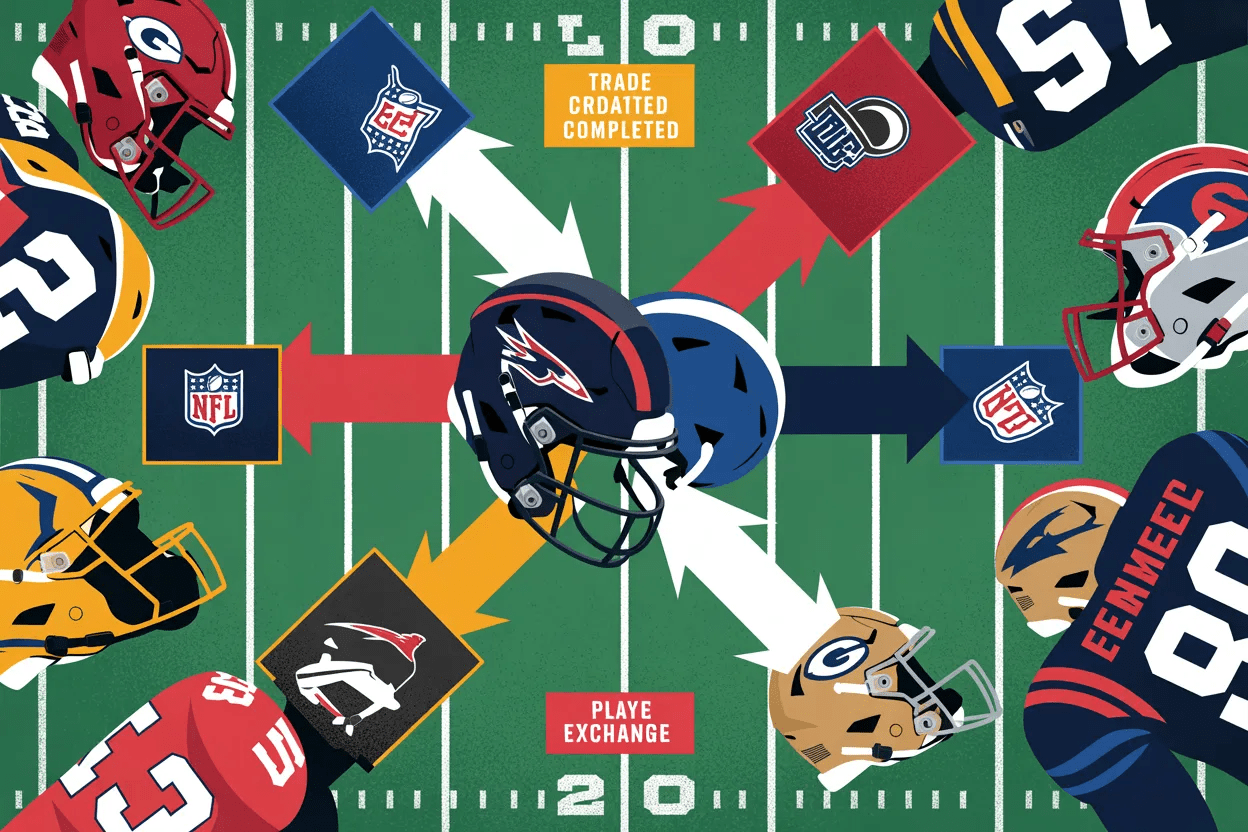
Welcome to the dynamic world of professional football, where off-field action is thrilling. The landscape of the league changes instantly through massive NFL trades. These exciting player swaps can transform a struggling franchise into a legitimate Super Bowl contender overnight. Fans across the nation eagerly wait to see where top superstars will land next. It is like a complex puzzle where teams shuffle pieces to create a perfect roster. Understanding these moves makes watching Sunday games significantly more enjoyable.
The magic of these deals happens behind closed doors in busy front offices. General managers spend countless hours negotiating with rival teams over the phone. They meticulously evaluate player statistics, injury histories, and their own roster needs. It is rarely a simple decision for the team executives. They must ensure the newly acquired talent seamlessly fits their offensive or defensive schemes. Both organizations must perfectly align on the perceived value of the amazing athletes involved in the deal.
Key People Involved in Making Deals Happen
| Role in the Organization | Primary Responsibility During a Trade | Level of Influence |
| General Manager | Initiates talks, manages budget, makes final calls | Extremely High |
| Head Coach | Evaluates if the player fits the specific game plan | Very High |
| Team Owner | Approves massive financial impacts and contracts | High |
| Player’s Agent | Negotiates new contract terms if required by the team | Medium |
| Salary Cap Expert | Ensures the team stays under the league spending limit | High |
Understanding the strict financial rules is essential when discussing modern NFL trades. The league uses a hard salary cap, meaning teams have a maximum spending limit. This critical rule ensures competitive balance so wealthy markets cannot simply hoard all superstars. When structuring major deals, executives must carefully analyze their available cap space. If an athlete’s contract is too expensive, the receiving organization simply cannot complete the transaction without making other difficult roster cuts to free up the money.
Sometimes, franchises are forced into making deals solely for financial relief. They might trade away a beloved veteran simply to shed a massive contract. This painful strategy clears valuable cap space for the upcoming offseason free agency period. However, teams must also consider “dead money,” which is cap space taken up by players no longer on the roster. Balancing current talent with future financial flexibility is the hardest challenge a general manager faces when executing complex NFL trades.
Primary Reasons Teams Trade for Financial Relief:
- To create immediate room to sign highly targeted free agents.
- To roll over unused salary cap space into the next playing year.
- To escape long-term contracts of players who are currently underperforming.
- To afford massive contract extensions for their young, home-grown superstars.
- To completely reset the team budget during a massive franchise rebuild.
Front offices frequently face a difficult choice between keeping draft picks or acquiring proven veterans. In many high-stakes NFL trades, a desperate contender will happily surrender future selections. They make this sacrifice to secure an experienced playmaker who can push them toward a championship immediately. Draft picks hold immense value because they provide cheap, young talent for four years. However, drafting unproven college athletes always carries a significant inherent risk of failure at the professional level.
Conversely, acquiring an established star provides guaranteed production and vital veteran leadership. Sacrificing high draft capital is a massive gamble for any ambitious general manager. If the newly acquired superstar suffers a severe injury, the franchise sacrifices both their present success and future foundation. These aggressive maneuvers require extreme confidence and exceptional strategic foresight. Teams use complex trade value charts to mathematically ensure they are receiving fair compensation when swapping draft picks for established professional players.
Understanding the Value of Draft Picks
| Draft Round Traded | Expected Return Value | Risk Level for Trading Team |
| 1st Round Pick | Elite superstar or starting franchise quarterback | Massive Risk |
| 2nd Round Pick | Proven starting player with great historical stats | High Risk |
| 3rd Round Pick | Solid rotational player or aging former superstar | Medium Risk |
| 4th to 5th Round | Backup players or special teams contributors | Low Risk |
| 6th to 7th Round | Player swaps or very minor roster adjustments | Very Low Risk |
The official trade deadline creates the most chaotic week of the entire football season. This specific date marks the final opportunity for organizations to execute NFL trades before the playoffs. As the deadline approaches, immense pressure mounts on team executives. Contenders must evaluate if their current roster possesses enough firepower to win a championship. If they identify a glaring weakness, they will scramble to finalize a last-minute deal to bolster their lineup for a deep postseason run.
The final hours leading up to this deadline are filled with wild rumors. Excited fans constantly refresh their social media feeds hoping for breaking news. Some of the most impactful NFL trades in history have materialized at the absolute last second. This frantic environment creates incredible drama and heightens anticipation for the remainder of the schedule. Teams that are losing will often use this deadline to sell off their older players to contending teams for valuable picks.
How to Spot a “Buyer” vs. a “Seller” at the Deadline:
- Buyers usually have winning records and need one final missing piece.
- Sellers have losing records and want to prepare for next year.
- Buyers happily trade away their future draft picks for immediate help.
- Sellers trade away older, expensive veterans to save essential cap space.
- Buyers are typically aggressive, while Sellers are extremely patient negotiators.
There are several distinct varieties of player movement within the professional football landscape. The most traditional format is a straightforward player-for-player swap. These rare NFL trades occur when two franchises possess excess talent at opposite positions. A more common scenario involves a team sending a player away in exchange for future draft selections. This allows a rebuilding franchise to stockpile assets while helping a competitive team fill an immediate void on their active starting lineup without losing current players.
Another exciting variation is the conditional trade, which heavily relies on future performance. In these unique NFL trades, the final compensation changes based on specific milestones. For example, a fourth-round draft pick might upgrade to a third-round pick if the traded player participates in enough games. This creative structure protects the acquiring team if the player underperforms or gets injured. It also rewards the trading team if the athlete finds immense success in their new competitive environment.
Most Common Types of Roster Swaps
| Trade Structure | Why Teams Use This Method | Frequency in the League |
| Player for Draft Picks | To gain future assets while losing immediate talent | Extremely Common |
| Draft Pick for Draft Pick | Used during the draft to move up or down the board | Very Common |
| Player for Player | To swap unneeded talent for areas of immediate weakness | Rare |
| Conditional Pick Swaps | To protect teams from injuries or poor player performance | Somewhat Common |
| Three-Team Trades | Used when two teams cannot agree without a third partner | Extremely Rare |
These massive roster changes dramatically impact the wildly popular game of fantasy football. Millions of dedicated fans act as their own general managers every autumn. Real-world NFL trades force fantasy managers to rapidly adjust their weekly starting lineups. When a talented running back moves to an offense with a better offensive line, his fantasy value skyrockets instantly. Savvy fantasy players constantly monitor breaking trade news to gain a crucial competitive advantage over their friends and league rivals.
A player’s fantasy outlook can also plummet completely after a sudden change in scenery. A star wide receiver traded to a team with a terrible quarterback will likely catch fewer passes. Therefore, understanding the real-life implications of NFL trades is vital for fantasy success. You must evaluate the new coaching scheme and the surrounding talent immediately. Being the first person in your league to react to a major blockbuster deal can easily secure a fantasy championship trophy.
Immediate Fantasy Football Impacts After a Trade:
- Running backs often see immediate usage increases in better offensive schemes.
- Wide receivers usually need several weeks to learn the new playbook.
- Quarterbacks rarely perform well instantly after moving during the active season.
- Tight ends rely heavily on building quick trust with their new quarterback.
- Defensive players can instantly boost a team’s total defensive fantasy output.
Looking back at the history of the league reveals some truly unbelievable blockbuster deals. Some monumental NFL trades have completely altered the trajectory of multiple franchises simultaneously. When a generational talent suddenly switches uniforms, it sends shockwaves throughout the entire sports world. These historic moves often define the legacies of the bold general managers who execute them. Fans passionately debate these massive transactions for decades, analyzing which organization truly won the deal based on the final championship results.
One famously lopsided trade allowed a single franchise to build a dynasty in the 1990s. They traded away their best running back for a massive haul of draft picks. They used those acquired selections to draft multiple Hall of Fame players. This perfectly illustrates how brilliant NFL trades can systematically construct a legendary team from scratch. History proves that hoarding draft capital and utilizing it wisely is the most reliable method for achieving long-term sustainable dominance in professional football.
Historic Deals That Changed Everything
| Era of the Trade | Primary Players Involved | Ultimate Result of the Move |
| Late 1980s | A massive haul of picks for one superstar running back | Created a 1990s Super Bowl dynasty |
| Early 2000s | Trading a legendary veteran quarterback to a rival | Paved the way for a younger superstar |
| The 2010s | Swapping first-round picks for an elite pass rusher | Won a championship for the receiving team |
| Modern Day | Trading massive assets for an aging franchise quarterback | Resulted in an immediate Super Bowl ring |
It is crucial to remember the human element involved in these massive corporate transactions. Professional athletes are real people with families, children, and deep community ties. When unexpected NFL trades occur, players must uproot their entire lives within a matter of hours. They leave behind close friends and comfortable routines to relocate across the country. This abrupt transition can be incredibly stressful for the athlete’s family, who must find new schools and homes in an unfamiliar city.
Furthermore, the traded athlete faces immense professional pressure upon arriving at their new facility. They must instantly learn a highly complex playbook filled with brand new terminology. The coaching staff expects them to perform at an elite level almost immediately after stepping off the airplane. Surviving mid-season NFL trades requires incredible mental toughness and extreme adaptability. It proves that playing professional football demands far more than just supreme physical talent; it requires exceptional resilience and sharp intelligence.
Hidden Challenges Traded Players Must Overcome:
- Learning hundreds of new offensive or defensive plays in just days.
- Building instant chemistry and trust with totally unfamiliar locker room teammates.
- Adapting to completely different coaching styles and strict organizational rules.
- Managing the extreme stress of relocating their family during the school year.
- Handling intense media pressure and massive expectations from their new fans.
Rebuilding a struggling franchise requires immense patience from both the front office and the fanbase. When an organization realizes their current core cannot win, they must pivot their strategy. They will utilize aggressive NFL trades to completely tear down their existing roster. By shipping off expensive veterans, they acquire a treasure trove of young, inexpensive draft picks. This painful process inevitably leads to losing seasons in the short term, which naturally frustrates the passionately loyal ticket buyers.
However, if the scouting department successfully identifies top college talent, the rebuild will ultimately succeed. Those acquired draft picks eventually develop into the next generation of league superstars. Executing these forward-thinking NFL trades is similar to carefully planting seeds in a garden. The general manager must nurture the young talent and wait several years to harvest a championship team. It requires absolute unwavering commitment to a long-term vision, even when facing intense criticism from the local media.
The Lifecycle of a Franchise Rebuild
| Phase of Rebuild | Strategy Used by the General Manager | Fan Emotion |
| Phase 1: Tear Down | Trading away all expensive veteran players for draft capital | Anger and Frustration |
| Phase 2: The Draft | Using acquired picks to select top-tier college athletes | Hope and Excitement |
| Phase 3: Development | Allowing rookies to play and learn from their mistakes | Patience and Anxiety |
| Phase 4: Contending | Utilizing remaining cap space to sign the final puzzle pieces | Extreme Joy |
The exciting action of professional football truly never sleeps, even during the quiet offseason. When no actual games are being played, front offices are working their hardest. They utilize this valuable time to execute strategic NFL trades without the pressure of a ticking game clock. Organizations can carefully negotiate with multiple partners to find the absolute perfect deal. These critical offseason maneuvers set the foundation for the entire upcoming regular season and generate massive hype among dedicated supporters.
In conclusion, understanding the intricate mechanics behind these roster moves deepens your appreciation for the sport. The constant evolution of team rosters ensures that every new season feels entirely fresh and unpredictable. Whether it is a massive blockbuster or a minor depth move, NFL trades represent the ultimate strategic chess match. Keep watching the news wires closely, because the next massive franchise-altering deal could happen at any moment. The thrilling business of football never stops evolving.