Peptic Ulcer Disease ICD 10: Your Complete Guide to Diagnosis, Pain Relief, and Healing
Introduction
A sharp, gnawing burn deep in your gut is a clear distress signal. You feel it flare up between meals and jolt you awake at night. Finding the correct Peptic Ulcer Disease ICD 10 code is the first real step toward a structured recovery plan.
This guide delivers the exact diagnostic code, breaks down every major symptom of this painful condition, maps out effective peptic ulcer treatment routes, and lays out a healing diet. Stop masking the ache with temporary fixes. Understand the root cause of your peptic ulcer, lock in the right medical code, and start rebuilding your stomach lining today.
Exact Peptic Ulcer Disease ICD 10 Code
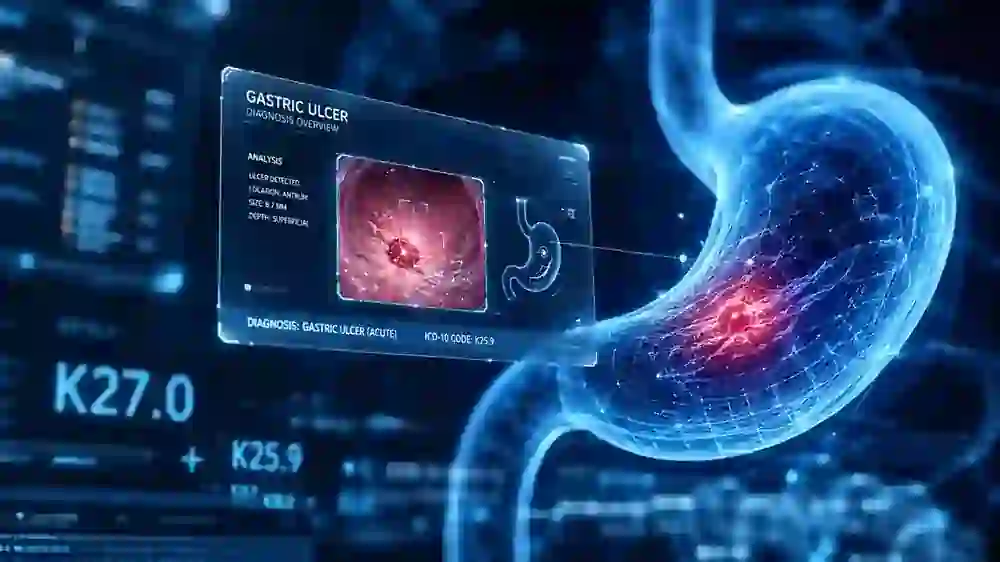
Medical coding turns a complex diagnosis into an actionable roadmap. The base Peptic Ulcer Disease ICD 10 category is K27. A generic code, however, fails to capture the true clinical picture. Specificity dictates proper billing, authorizes advanced procedures, and paints a clear portrait of the patient’s condition.
The whole ICD 10 code structure for Peptic Ulcer Disease is as follows:
| ICD-10 Code | Detailed Description of Peptic Ulcer Condition |
| K27.0 | Acute peptic ulcer with active hemorrhage |
| K27.1 | Acute peptic ulcer with perforation |
| K27.2 | Acute peptic ulcer with perforation and bleeding |
| K27.3 | Acute peptic ulcer without hemorrhage or perforation |
| K27.4 | Chronic or unspecified peptic ulcer with hemorrhage |
| K27.5 | Chronic or unspecified peptic ulcer with perforation |
| K27.6 | Chronic or unspecified peptic ulcer with both hemorrhage and perforation |
| K27.7 | Chronic peptic ulcer without hemorrhage or perforation |
| K27.9 | Peptic ulcer, unspecified as acute or chronic, without hemorrhage or perforation |
Why Precision in Peptic Ulcer Disease ICD 10 Coding Wins
An unspecified code like K27.9 triggers claim rejections when a bleeding vessel is clearly documented. During an endoscopy, a gastroenterologist spots a spurting artery at the ulcer base.
The coder must capture K27.0 for an acute hemorrhagic peptic ulcer. This level of detail directly links the Peptic Ulcer Disease ICD 10 diagnosis to the performed hemostasis procedure. It secures authorization and paints a legally sound clinical story.
Recognizing Peptic Ulcer Symptoms: A Body Under Attack
An eroded stomach lining broadcasts unmistakable warnings. Ignoring them lets a little erosion grow into a serious injury.Knowing the full range of peptic ulcer symptoms helps you act before a crisis hits.
The Hallmark Sign: Burning Peptic Ulcer Pain
The signature peptic ulcer symptom is a corrosive, burning stomach pain. This peptic ulcer pain intensifies when acid bathes an empty stomach. It strikes hardest in the quiet hours between lunch and dinner and frequently yanks people out of deep sleep around 2 a.m. The classic peptic ulcer pain location sits squarely in the epigastric region, right where the ribs meet in the upper middle abdomen.
Additional Signs of Peptic Ulcer
- Uncomfortable bloating that appears shortly after eating
- A sudden intolerance to rich, fatty meals
- Persistent heartburn or a sour liquid rising in the throat
- Nausea that often peaks first thing in the morning
Red Flag Peptic Ulcer Disease Symptoms
- Vomit streaked with bright red blood or resembling dark coffee grounds
- Sticky, tar-black stool that smells unusually foul
- A sudden, tearing, knife-sharp pain that doubles you over
- Unexplained weight loss and pale skin from chronic blood loss
These peptic ulcer disease symptoms scream internal bleeding or a perforated peptic ulcer. A perforation spills gastric acid and bacteria into the sterile peritoneal cavity. This triggers peritonitis and sepsis within hours. Emergency surgery is non-negotiable.
Peptic Ulcer Causes: Why the Lining Breaks Down
A peptic ulcer is an open sore digging into the mucosa. Two primary aggressors strip away the stomach’s defensive shield.
H. Pylori Infection as a Peptic Ulcer Cause
Helicobacter pylori is a corkscrew-shaped bacterium that drills into the protective mucus layer. It secretes urease, an enzyme that converts urea into ammonia to neutralize stomach acid in its immediate vicinity. The body’s immune cells swarm the site, releasing inflammatory cytokines that weaken the epithelial barrier. Over decades, this chronic gastritis erodes the tissue until an ulcer crater forms. Around half the global population harbors H. pylori, yet only a fraction develop a symptomatic peptic ulcer.
NSAIDs as a Peptic Ulcer Cause
Nonsteroidal anti-inflammatory drugs like ibuprofen, naproxen, and high-dose aspirin slash prostaglandin production. Prostaglandins maintain the stomach’s thick, bicarbonate-rich mucus coat and regulate mucosal blood flow. Without them, raw epithelium faces undiluted hydrochloric acid. Daily, long-term NSAID use creates the highest risk of peptic ulcer disease. Combining NSAIDs with corticosteroids or anticoagulants multiplies the danger.
Other Contributors to Peptic Ulcer
Alcohol directly erodes the mucus gel layer. Heavy smoking doubles acid secretion, suppresses pancreatic bicarbonate output, and constricts mucosal blood vessels, slowing ulcer healing. Severe physiological stress—major burns, traumatic brain injury, or prolonged ICU ventilation—triggers acute stress peptic ulcer formation within 24 hours via splanchnic hypoperfusion.
Peptic Ulcer vs Gastric Ulcer: A Clear Distinction
Patients and coders alike mix up these terms. The distinction shapes the peptic ulcer treatment protocol and determines biopsy necessity.
- Peptic Ulcer: The broad umbrella. It encompasses any acid-pepsin sore in the stomach or the duodenal bulb.
- Gastric Ulcer: A sore confined strictly to the stomach lining. Pain often worsens immediately after eating, as food and acid irritate the exposed crater.
- Duodenal Ulcer: A sore in the duodenum’s first portion. Pain surfaces two to three hours after a meal and often finds temporary relief with food or antacids.
Why Peptic Ulcer vs Gastric Ulcer Matters
A gastric ulcer carries a small but clinically significant malignancy risk. Endoscopists always take multiple biopsies from the ulcer edge and base to rule out adenocarcinoma or lymphoma. A duodenal peptic ulcer is almost universally benign. This pathological difference dictates follow-up endoscopy protocols and the long-term monitoring plan.
How to Diagnose Peptic Ulcer Disease
Definitive diagnosis requires direct visualization. Guessing based on peptic ulcer symptoms alone leads to mismanagement.
Upper Endoscopy (EGD) for Peptic Ulcer Diagnosis
A gastroenterologist passes a flexible fiberoptic scope through the mouth into the stomach and duodenum. They see the ulcer’s exact dimensions, depth, and stigmata of recent hemorrhage. If a visible vessel protrudes, they inject epinephrine and apply thermal coagulation or a hemostatic clip immediately.This one technique prevents active bleeding in real time and verifies the Peptic Ulcer Disease ICD 10 hemorrhagic code.
H. Pylori Testing for Peptic Ulcer Disease
- Urea Breath Test: You ingest carbon-labeled urea. Active H. pylori urease splits it, releasing labeled CO2 detectable in your exhaled breath. This confirms current infection with high sensitivity.
- Stool Antigen Test: A lab identifies H. pylori proteins in stool. Clinicians use this post-treatment to verify bacterial eradication.
- Biopsy-Based Testing: Tissue obtained during endoscopy undergoes a rapid urease test or histology with special stains.
Peptic Ulcer Disease Medication: Neutralizing the Attack
Healing a peptic ulcer demands a coordinated pharmacological assault. Peptic ulcer disease medication suppresses acid, shields the crater, and kills the causative bacteria.
| Drug Class | Mechanism in Peptic Ulcer Treatment | Common Peptic Ulcer Disease Medication Examples |
| Proton Pump Inhibitors (PPIs) | Irreversibly block the gastric H+/K+ ATPase enzyme, shutting down acid secretion at its source. | Omeprazole, Pantoprazole, Esomeprazole |
| H2 Receptor Antagonists | Block histamine-2 signals on parietal cells, reducing acid volume. Less potent than PPIs. | Famotidine, Cimetidine |
| Cytoprotective Agents | Form a viscous, sticky paste that selectively binds to ulcerated tissue proteins, creating a physical shield for 6+ hours. | Sucralfate (Carafate) |
| Bismuth Subsalicylate | Coats the ulcer base, exhibits direct bactericidal action against H. pylori, and stimulates mucosal prostaglandin synthesis. | Pepto-Bismol (quadruple therapy component) |
| Antibiotics for Peptic Ulcer | Eradicate H. pylori using dual agents to prevent resistance. | Clarithromycin, Amoxicillin, Metronidazole, Tetracycline |
Effective Peptic Ulcer Disease Medication Regimens
Triple therapy pairs a high-dose PPI with amoxicillin and clarithromycin for 10–14 days. Quadruple therapy adds bismuth subsalicylate and often uses metronidazole plus tetracycline.
This second regimen proves superior in regions where clarithromycin resistance exceeds 15%. Completing the full course of peptic ulcer disease medication without missing a single dose prevents resistant strains from emerging and stops the ulcer from roaring back.
Peptic Ulcer Disease Treatments: Medical Procedures
When peptic ulcer disease medication fails to control bleeding or a perforation occurs, procedural intervention becomes the only option.
Endoscopic Hemostasis for Bleeding Peptic Ulcer
Through the endoscope, the gastroenterologist identifies a Forrest class Ia (spurting) or Ib (oozing) hemorrhage. They deploy a thermal probe to coagulate the bleeding point. Alternatively, they place a hemoclip that pinches the vessel wall shut permanently. Diluted epinephrine injected into the submucosa provides temporary vasoconstriction, buying a clear field for definitive clipping or coagulation.
Emergency Surgery for Perforated Peptic Ulcer
An urgent surgical procedure is required for a perforated peptic ulcer. The surgeon performs an exploratory laparotomy, irrigating the abdominal cavity with copious warm saline to dilute spilled gastric contents.
They then harvest a tongue of healthy, vascular omentum and sew it securely over the perforation hole. This omental patch seals the leak, and its rich blood supply delivers immune cells and healing factors directly to the site.
External Source: American College of Gastroenterology Clinical Guideline on Upper GI and Ulcer Bleeding.
How to Treat Peptic Ulcer Holistically
Pills start mucosal repair. Daily habits and food choices drive permanent healing. This is how to treat a peptic ulcer from the inside out.
Building an Effective Peptic Ulcer Diet
Food either buffers acid or triggers another painful wave. A healing peptic ulcer diet centers on frequency and gentle choices.
- Healing Foods for Peptic Ulcer: Fiber-rich oatmeal forms a protective mucilage coating. Fermented yogurt with Lactobacillus and Bifidobacterium strains rebalances the gut microbiome decimated by antibiotics. Manuka honey demonstrates direct bacteriostatic effects against H. pylori in laboratory models. Steamed cabbage and broccoli supply sulforaphane, a compound that may inhibit H. pylori growth.
- Foods to Avoid with Peptic Ulcer: Black coffee on an empty stomach spikes gastric acid output within minutes. Carbonated sodas distend the stomach and intensify peptic ulcer pain. Deep-fried foods delay gastric emptying, marinating the ulcer in acid for hours. Spicy chili powder containing capsaicin irritates exposed nerve endings in the ulcer bed.
- Peptic Ulcer Diet Meal Pattern: Consume five to six small meals spaced evenly. Never let the stomach sit completely empty for over three hours during active treatment.
Lifestyle Adjustments to Heal a Peptic Ulcer
Stop smoking completely. Nicotine accumulates in the gastric epithelium, increases peak acid output, and starves the mucosa of oxygen by constricting microvessels. Eliminate alcohol during the active healing phase. Ethanol strips the protective mucus gel layer directly. Manage stress through diaphragmatic breathing and regular sleep, as elevated cortisol drives excess acid secretion.
Peptic Ulcer Pain: Sensation, Location, and Fast Relief
Understanding exactly what peptic ulcer pain feels like helps distinguish it from gallbladder attacks or pancreatitis.
What Does Peptic Ulcer Pain Feel Like?
Patients do not describe a stabbing sensation. They describe a dull, relentless, hot coal burning deep inside the upper belly. It gnaws rather than cuts. This peptic ulcer ache mimics a severe hunger pang but refuses to fully resolve even after eating.
Immediate Relief for Peptic Ulcer Pain
- Drink an 8-ounce glass of water to instantly dilute the acid pool bathing the ulcer.
- Consume a small, soft snack like a banana or a slice of plain bread to soak up excess acid.
- Take a dose of liquid antacid for rapid, 5-minute neutralization.
- Remain upright for 30 minutes; lying supine lets acid splash onto the ulcer and reflux into the esophagus.
Critical Warning About Peptic Ulcer Pain
A sudden, total cessation of severe peptic ulcer pain is not a healing sign. It often signals that a perforation has burst open, releasing pressure as acid floods the peritoneum. This quiet moment precedes catastrophic peritonitis. Seek an emergency CT scan or upright chest X-ray immediately to rule out free air under the diaphragm.
Can a Peptic Ulcer Heal on Its Own?
Small, superficial erosions might close spontaneously if the sole trigger—like a short course of ibuprofen—stops immediately. A true, deep peptic ulcer that requires a Peptic Ulcer Disease ICD 10 code rarely heals without targeted medical help. H. pylori colonies do not spontaneously clear from the gastric mucosa.
Without a full course of peptic ulcer disease medication, the crater deepens into the submucosa and muscularis layers. Silent internal bleeding causes iron-deficiency anemia. Chronic inflammation lays down fibrotic scar tissue, eventually narrowing the pyloric channel and causing gastric outlet obstruction. Do not gamble on spontaneous healing. Seek a definitive diagnosis and active treatment.
Complete Peptic Ulcer Reference Table
| Key Peptic Ulcer Question | Direct, Detailed Answer |
| What is a peptic ulcer? | An open, painful sore in the stomach or duodenal lining caused when pepsin and hydrochloric acid erode through the protective mucus layer into deeper tissue. |
| What is peptic ulcer disease? | A chronic, relapsing condition characterized by the formation of peptic ulcers, driven primarily by persistent H. pylori infection or ongoing NSAID damage to the gastrointestinal mucosa. |
| What is a perforated peptic ulcer? | A full-thickness hole through the stomach or duodenal wall. It allows luminal contents, including acid and bacteria, to spill freely into the peritoneal cavity, causing chemical and later bacterial peritonitis. |
| How to diagnose peptic ulcer? | The gold standard is an upper endoscopy with direct visualization and biopsy. Non-invasive testing includes the urea breath test and stool antigen test for H. pylori combined with clinical symptom assessment. |
| What to eat with peptic ulcer? | Eat soft, high-fiber, low-acid foods including oatmeal, bananas, melon, yogurt with live cultures, lean baked poultry, steamed vegetables, and a teaspoon of raw honey. Avoid coffee, alcohol, and fried foods. |
| How to cure peptic ulcer? | Eradicate H. pylori with a 14-day course of dual antibiotics plus a powerful PPI. Shield the crater with sucralfate between meals. Eliminate NSAIDs, alcohol, and nicotine permanently. Confirm eradication four weeks post-therapy. |
Frequently Asked Questions About Peptic Ulcer Disease
What is peptic ulcer disease ICD 10 code K27.4?
The Peptic Ulcer Disease ICD 10 code K27.4 denotes a chronic peptic ulcer with active hemorrhage. Coders apply this when an endoscopist documents a visible bleeding vessel, an adherent clot, or coffee-ground material inside the stomach. It directly links the peptic ulcer diagnosis to the hemostasis procedure performed.
What signs and symptoms indicate a peptic ulcer?
Core peptic ulcer symptoms include a gnawing, burning epigastric pain that worsens on an empty stomach, nocturnal awakening from pain, bloating, nausea, and early satiety. Advanced peptic ulcer disease symptoms include vomiting blood, passing black tarry stool, and feeling lightheaded from anemia.
What causes a peptic ulcer?
The two dominant peptic ulcer causes are chronic infection with Helicobacter pylori bacteria and the regular use of NSAID pain relievers. H. pylori burrows into the mucus layer and triggers inflammation. NSAIDs block prostaglandin synthesis, stripping away the stomach’s protective bicarbonate-rich mucus coat.
How to treat a peptic ulcer?
Treat a peptic ulcer by eradicating H. pylori with a 14-day course of dual antibiotics and a high-dose proton pump inhibitor. If NSAID-induced, immediately discontinue the offending drug. Add sucralfate to coat the ulcer between meals. Follow a strict peptic ulcer diet and eliminate smoking and alcohol completely.
What does a peptic ulcer feel like?
A peptic ulcer feels like a deep, dull, corrosive burn in the center of the upper abdomen, just below the sternum. It mimics an intense hunger pang but eating only brings temporary relief before the pain returns. It gnaws relentlessly and often disturbs sleep around 2 to 3 a.m.
Is it possible for a peptic ulcer to heal itself?
No, a deep peptic ulcer with a defined crater rarely heals without medical treatment. While superficial erosions may close if NSAIDs stop, an H. pylori-driven ulcer persists and deepens. Untreated, it risks hemorrhage, perforation requiring emergency surgery, or gastric outlet obstruction from chronic scarring.
Conclusion: Take Control of Your Peptic Ulcer Recovery
The Peptic Ulcer Disease ICD 10 code anchors a care plan that stops the burning at its source. You now understand the exact coding structure, the specific peptic ulcer symptoms that demand an ER visit, and the dual antibiotic regimen that eradicates H. pylori permanently.
You know how to build a peptic ulcer diet that soothes rather than irritates, and you recognize that a sudden loss of pain can signal a surgical emergency, not a cure. Take this structured knowledge to your next medical appointment. Request the breath test, fill the full prescription, and eat with intention. Your gastric mucosa regenerates rapidly when you remove the ongoing insult. Start your recovery protocol today, and extinguish the fire inside for good.