Osteopenia vs Osteoporosis: The Complete Guide to Saving Your Bone Density
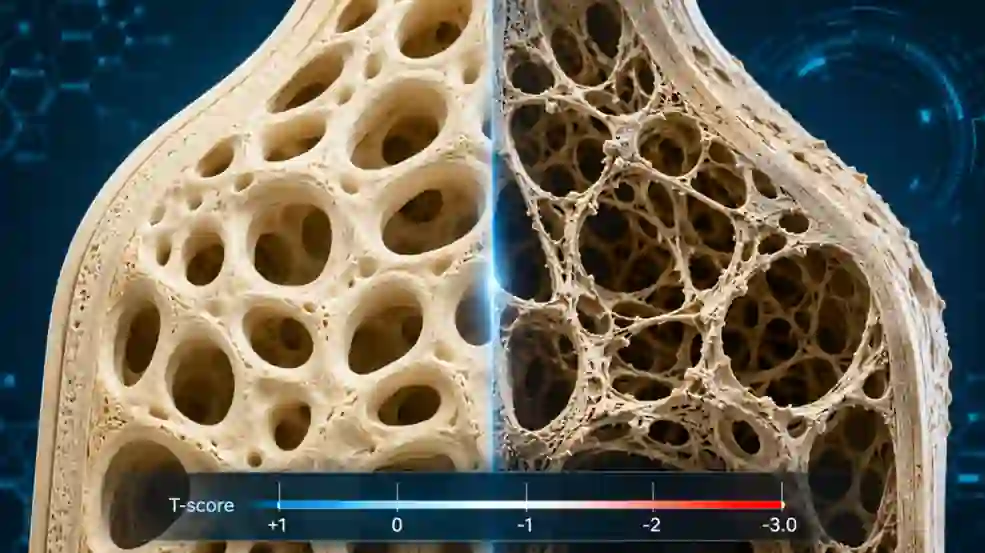
A routine bone density scan just handed you terms like osteopenia or osteoporosis. Your doctor mentioned them, but the panic hasn’t settled yet. You want straight answers about osteopenia vs osteoporosis. The core difference sits in one number: your T-score. Crossing that line changes your fracture risk dramatically. Knowing exactly what separates osteopenia vs osteoporosis gives you the power to stop bone loss before a simple fall shatters your future.
What Exactly Is Osteoporosis?
The word osteoporosis literally means porous bone. Doctors define osteoporosis as a metabolic bone disease where your body loses too much bone tissue or makes too little. The internal architecture of your skeleton weakens silently. You can’t feel your bones getting thinner.
Under a microscope, healthy bone resembles a dense honeycomb. With an osteoporosis definition, that honeycomb develops large holes and thin walls. Bones become fragile enough that a minor bump, a cough, or bending over can cause a break. Understanding osteopenia vs osteoporosis starts with recognizing that osteoporosis represents the advanced, dangerous stage of bone loss.
What Are the Silent Signs of Osteoporosis?
Osteoporosis symptoms rarely announce themselves with pain until late in the disease. You won’t wake up feeling your spine collapsing. You might notice a gradual loss of height over several years. Your favorite shirts might seem longer because your torso shortens.
A stooped posture develops as the front of your vertebrae cracks. The most common signs of osteoporosis include receding gums if your jawbone loses density, a weaker grip strength, and brittle fingernails. A fragility fracture—breaking a bone from a fall that wouldn’t normally hurt a healthy person—often serves as the first physical symptom. When comparing osteopenia vs osteoporosis, the symptom profile shifts from silent thinning to actual structural damage.
Osteopenia vs Osteoporosis: The T-Score Battle
Bone density tests deliver a number called a T-score. This single value draws the line between osteopenia vs osteoporosis. A normal T-score lands at -1.0 or above. The diagnosis shifts to osteopenia when your score drops between -1.1 and -2.4. Once that number hits -2.5 or lower, you have officially crossed into osteoporosis territory. Severe osteoporosis means you have a T-score below -2.5 with at least one fragility fracture already present.
“What is the t-score for severe osteoporosis?” is a question that many patients have. The answer is a T-score of -3.0 or worse with fractures. Think of osteopenia as a yellow caution light and osteoporosis as a red emergency signal. This distinction makes understanding osteopenia vs osteoporosis absolutely critical for treatment decisions.
Key Differences Between Osteopenia vs Osteoporosis
| Feature | Osteopenia | Osteoporosis |
| T-Score Range | -1.1 to -2.4 | -2.5 and lower |
| Bone Structure | Mild thinning visible | Severe honeycomb deterioration |
| Fracture Risk | 1.5 to 2 times higher than normal | 4 to 5 times higher than normal |
| Pain Presence | Usually none | Can cause chronic back pain from micro-fractures |
| Treatment Approach | Lifestyle, calcium, vitamin D, weight-bearing exercise | Prescription medications often required |
| Reversibility Potential | Often stabilizes or improves with diet and exercise | Harder to reverse; medication can slow or partially rebuild |
| Progression Speed | Slow; can remain stable for years | Accelerated if left untreated |
The comparison of osteopenia vs osteoporosis reveals that early intervention during the osteopenia phase offers the best chance at preserving bone health.
What Causes Bone Density to Plummet?
Understanding what causes osteoporosis helps you identify your personal risk. Age remains the biggest factor. After age 30, your body breaks down old bone faster than it builds new tissue. For women, estrogen drops sharply during menopause and accelerates bone loss by up to 20% in the first five to seven years.
Men experience a slower testosterone decline, but thin bones still affect one in four men over 50. A sedentary lifestyle starves bones of the mechanical stress they need to stay dense. Smoking directly poisons osteoblasts—the cells that build bone. Heavy alcohol use interferes with calcium absorption.
Certain medical conditions like rheumatoid arthritis, celiac disease, and hyperthyroidism speed up the destruction. Long-term corticosteroid medications rank among the top osteoporosis causes in younger patients. When examining osteopenia vs osteoporosis, the same risk factors drive both conditions, just at different stages of severity.
Does Osteoporosis Run in Families?
You cannot change your DNA, but you can outsmart it. The question “is osteoporosis genetic” has a firm answer: yes, up to 80% of your peak bone mass is inherited. If your mother fractured a hip, your own risk doubles. The “is osteoporosis hereditary” connection becomes strongest when studying identical twins.
Small variations in the vitamin D receptor gene and collagen genes influence how dense your skeleton gets by age 30. Knowing your family history means starting bone density screenings earlier. You inherit the susceptibility, not the certainty. This genetic factor applies equally whether we’re discussing osteopenia vs osteoporosis.
Can You Actually Reverse Bone Loss?
Here comes the hope. Asking “can osteoporosis be reversed” has a more complex answer than a simple yes or no. Established osteoporosis cannot be fully reversed like flipping a switch. You cannot restore a fractured vertebra to its original state. However, asking “is osteoporosis reversible” gets a more optimistic answer with today’s medications. Some anabolic drugs like teriparatide build new bone tissue rather than just stopping destruction.
Bisphosphonates can reduce the risk of spine fractures by 50-70% and increase bone density by 4-8% over several years. The real victory lies in preventing osteopenia from progressing. When comparing osteopenia vs osteoporosis, the reversal potential heavily favors catching bone loss early.
Osteoporosis ICD 10 Codes for Medical Records
Medical coding matters for proper diagnosis and insurance coverage. The osteoporosis icd 10 system breaks down the condition into specific categories. The primary icd 10 code for osteoporosis without fracture is M81.0. Age-related icd 10 osteoporosis falls under M81.0.
Postmenopausal osteoporosis uses the same M81.0 designation. When a fracture occurs, codes shift to M80 series. A spine compression fracture from osteoporosis gets coded as M80.08. Hip fractures linked to bone thinning use M80.05. Proper coding ensures your treatment gets approved without insurance denials.
Proven Osteoporosis Treatment Options That Work
The landscape of osteoporosis treatment has expanded dramatically. Bisphosphonates like alendronate (Fosamax) remain first-line osteoporosis medication options. These pills slow bone-eating osteoclasts. You take them on an empty stomach and stay upright for 30 minutes. For those asking “what is the safest injection for osteoporosis?” denosumab (Prolia) offers a twice-yearly subcutaneous shot with strong vertebral protection.
Romosozumab (Evenity) works as a dual-action injectable, simultaneously blocking bone breakdown and stimulating formation. The question “what is the best and safest treatment for osteoporosis” depends on your kidney function, fracture history, and how long you need therapy. A specialist reviews your dental health before starting any osteoporosis medication due to rare jaw complications. Treatment approaches differ significantly when doctors evaluate osteopenia vs osteoporosis.
List of Common Osteoporosis Medications
- Bisphosphonates: Alendronate, Risedronate, Zoledronic acid
- RANKL Inhibitor: Denosumab (Prolia injection)
- Sclerostin Inhibitor: Romosozumab (Evenity)
- Parathyroid Hormone Analog: Teriparatide (Forteo)
- SERMs: Raloxifene (Evista)
- Hormone Therapy: Estrogen for younger postmenopausal women
- Calcitonin: Nasal spray for acute vertebral fracture pain
A discussion of osteoporosis medications requires weighing benefits against rare side effects. Atypical femur fractures and osteonecrosis of the jaw create anxiety but occur in fewer than 1 in 10,000 patients per year. Stopping osteoporosis treatments abruptly can cause rapid bone loss. Always plan an exit strategy with your doctor.
How to Treat Osteoporosis Without Medication
For those seeking natural paths, “how to treat osteoporosis without medication” starts with aggressive nutrition and targeted exercise. Calcium from food sources like sardines, collard greens, and fortified plant milks outperforms supplements. Vitamin D3 at 2000-4000 IU daily ensures calcium absorption. Vitamin K2 directs calcium into bones instead of arteries.
Magnesium supports the conversion of vitamin D into its active form. Resistance training creates piezoelectric charges that stimulate osteoblast activity. Walking 30 minutes daily reduces hip fracture risk by 30%.
Eliminate the seven worst foods for osteoporosis: excess salt, soda, caffeine over three cups, alcohol beyond one drink, processed meats, wheat bran eaten separately from calcium, and high-oxalate spinach consumed without dairy. The osteopenia vs osteoporosis distinction matters here because natural treatments work best at the osteopenia stage.
How to Prevent Osteoporosis Starting Today
Prevention works at any age. To prevent osteoporosis, prioritize protein intake at 1.2 grams per kilogram of body weight. Complete heavy compound lifts like squats and deadlifts. Stop smoking completely since each cigarette leaches calcium. Limit alcohol to one drink per day maximum.
Screen early if you have a family history of fragility fractures. Build your maximum bone density before age 30, then protect it fiercely after 50. Weight-bearing exercise, sufficient sleep, and stress reduction all contribute to a skeleton that can withstand the aging process gracefully.
Frequently Asked Questions
What is the difference between osteopenia vs osteoporosis?
The difference between osteopenia vs osteoporosis comes down to T-score severity. Osteopenia means bone density is below normal with a T-score between -1.1 and -2.4. Osteoporosis means T-scores of -2.5 or worse with significantly higher fracture risk. Understanding osteopenia vs osteoporosis helps patients take appropriate action at each stage.
Does osteoporosis cause pain?
Osteoporosis itself does not cause pain until a bone breaks. Compression fractures in the spine create sudden, sharp mid-back pain that wraps around the ribs. Once collapsed vertebrae heal, chronic dull aching may persist.
Is osteoporosis hereditary?
Yes, osteoporosis carries a strong genetic link. If your parents suffered hip fractures, your risk jumps significantly. Specific genes control bone size, density, and turnover speed. When evaluating osteopenia vs osteoporosis risk, family history plays a major role.
What are 5 symptoms of osteoporosis?
Five major symptoms of osteoporosis include gradual height loss of more than an inch, a curved or stooped upper back, unexpected fractures from minor falls, persistent back pain from collapsed vertebrae, and a visibly shorter or protruding abdomen as the rib cage tilts toward the hips.
Can you reverse osteoporosis?
Fully reversing osteoporosis remains challenging, but anabolic medications can partially rebuild bone. Teriparatide and romosozumab stimulate new bone formation. With aggressive treatment, T-scores can improve by one standard deviation or more within 18-24 months. The osteopenia vs osteoporosis comparison shows reversal happens more readily with the milder condition.
How to treat osteoporosis without medication?
Treat osteoporosis naturally through weighted vest walks, resistance band training, adequate calcium (1200 mg) and vitamin D3, collagen peptides, and eliminating bone-robbing habits like smoking and soda consumption. Balance exercises prevent the falls that turn thin bones into fractures. For anyone studying osteopenia vs osteoporosis, non-medication approaches work most effectively during the osteopenia phase.
Your Next Steps Toward Unbreakable Bones
You now hold a clear understanding of where you sit on the bone health spectrum. The distinction between osteopenia vs osteoporosis determines your urgency level. A diagnosis of osteopenia demands immediate action but not terror.
A diagnosis of osteoporosis requires commitment to an osteoporosis treatment plan, but it does not sentence you to a sedentary life. Fear of falling creates more disability than low bone density itself. Strong muscles protect weak bones. Schedule that DEXA scan if you have risk factors.
“Which osteoporosis medication offers me the most benefit with the least risk based on my T-score and fracture risk?”is something you ought to ask your physician immediately. Write down your calcium intake for three days and identify gaps. Your skeleton replaces itself every decade. Every single day you feed it well and challenge it with movement, you rewrite the future of your frame.