Psoriasis vs Eczema: How to Tell the Difference and Find the Right Relief
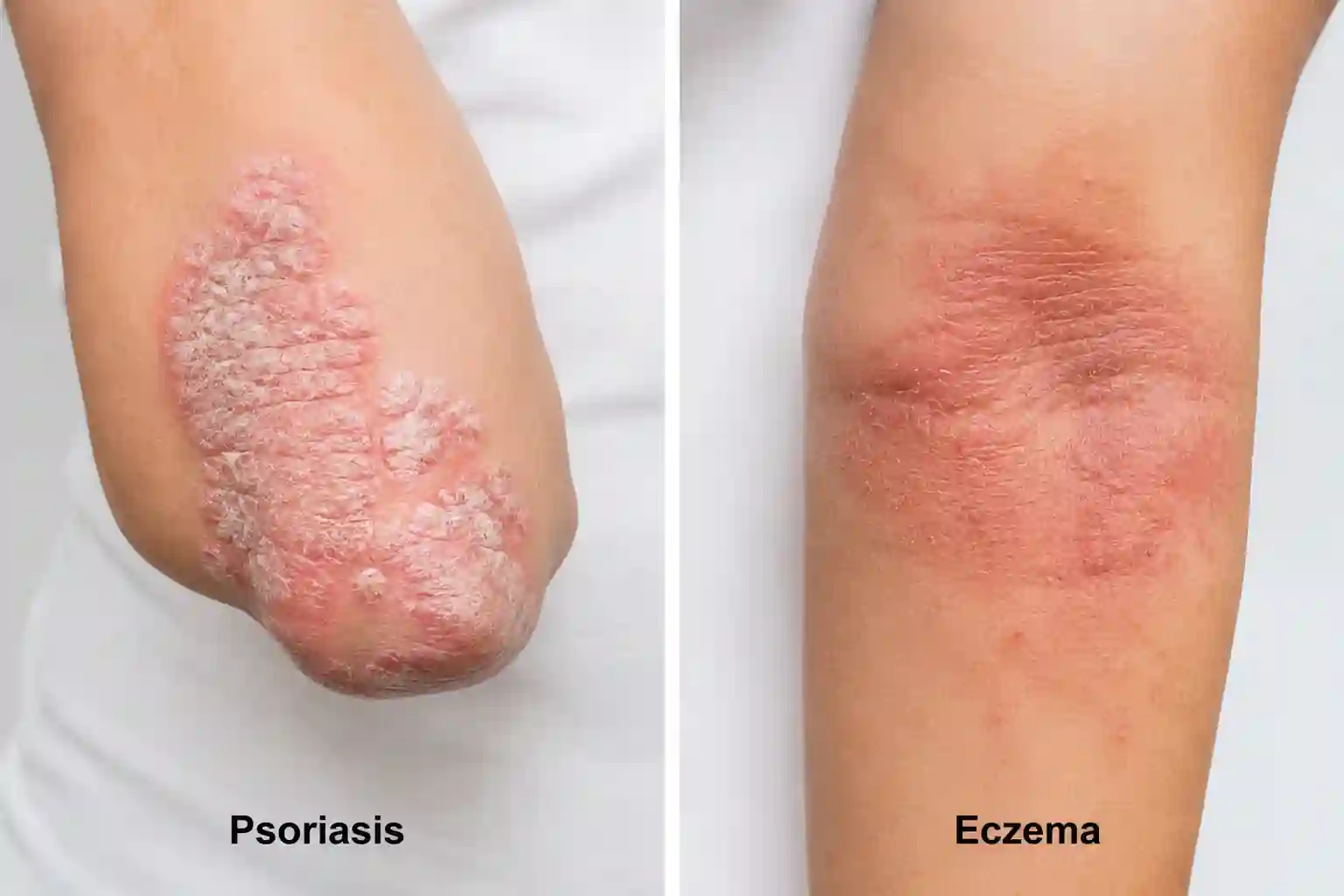
You wake up with angry, red patches on your elbows. Is it psoriasis, or is it eczema? You are not alone in asking this question. Millions of people mix up these two chronic skin conditions every single day, and honestly, the confusion can delay the right treatment for months.
A dermatologist I consulted during a persistent flare-up on my scalp told me something I will never forget: misidentifying your condition means you are probably using the wrong cream, wasting money, and suffering longer than you need to. This guide breaks down the real, visual, and medical differences between psoriasis vs eczema, so you can stop guessing and start healing.
What Exactly Is Psoriasis vs Eczema?
Psoriasis is an autoimmune disease that speeds up the life cycle of skin cells, causing them to build up rapidly on the surface. These extra cells form thick, silvery scales and dry, red patches that can itch or feel sore. The root problem lies deep within your immune system, where faulty signals tell your body to attack healthy skin cells.
Eczema, often called atopic dermatitis, stems from a hypersensitive reaction. Your skin’s protective barrier weakens, allowing moisture to escape and irritants to enter. This triggers intense itching, inflammation, and a red rash. Unlike psoriasis, eczema is linked to a gene variation that affects the skin’s ability to provide protection.
Key Differences in Psoriasis vs Eczema Symptoms
Spotting the difference becomes easier when you know exactly what to look for. Both conditions share redness and itching, but the fine details set them apart completely.
Psoriasis reveals itself through thick, well-defined patches covered in silvery-white scales. The skin feels raised, rough, and often burns or stings along with the itch. Eczema creates red or brownish-gray patches that appear dry, cracked, and scaly. The itching with eczema is usually intense, often described as unbearable, and scratching makes it worse, leading to swollen, sensitive skin.
Plaque psoriasis vs eczema creates the most confusion because plaque psoriasis produces large, covered lesions that look nothing like the flatter, less defined eczema patches. Scalp psoriasis vs eczema also differs greatly: psoriasis extends beyond the hairline onto the forehead and neck with thick scales, while scalp eczema stays confined mainly to the scalp with greasy, yellowish flakes.
Visual Comparison: Psoriasis vs Eczema Pictures in Your Mind
While you may search for psoriasis vs eczema pictures online, understanding what your eyes should detect helps you communicate better with a doctor. Psoriasis typically strikes the elbows, knees, scalp, and lower back. The patches have clear, sharp borders. Eczema prefers the creases of elbows, backs of knees, wrists, hands, and face, with blurred, less distinct borders.
Psoriasis vs eczema on face presents uniquely. Facial psoriasis often appears around the eyebrows, between the eyebrows, and along the hairline with defined, scaly red plaques. Facial eczema settles more on the eyelids and around the mouth, causing puffiness and darkening of the skin over time from chronic rubbing.
Psoriasis vs Eczema on Black Skin Demands Special Attention
Psoriasis vs eczema on black skin looks fundamentally different than on lighter complexions, and this fact remains underdiscussed. Psoriasis on darker skin appears as purple, violet, or dark brown patches rather than classic red. The silvery scales may appear grayish. After healing, you might notice dark or light spots lingering for months—a condition called post-inflammatory hyperpigmentation or hypopigmentation.
Eczema on black skin often shows up as dark brown, purple, or ashy gray patches. The surrounding skin may feel extremely dry and rough. Small, raised bumps around hair follicles, known as follicular accentuation, frequently accompany eczema in people of color. Recognizing these specific signs prevents dangerous misdiagnosis and ensures proper psoriasis vs eczema treatment.
What Triggers Psoriasis vs Eczema Flare-Ups?
Triggers differ dramatically. Psoriasis flare-ups respond to stress, skin injuries like cuts or sunburns, certain medications, infections such as strep throat, and cold, dry weather. A small scratch on your arm can turn into a new psoriasis patch two weeks later through a phenomenon called the Koebner response.
Eczema flares ignite from exposure to irritants: harsh soaps, detergents, fragrances, wool fabrics, dust mites, pollen, pet dander, certain foods, sudden temperature changes, and emotional stress. The skin barrier failure lets these triggers penetrate deeply.
Psoriasis vs Eczema Treatment: What Works for Each
Clear treatment paths exist for both conditions, but they rarely overlap. Psoriasis vs eczema treatment relies on targeting the underlying mechanisms, not just calming the surface.
For mild to moderate psoriasis, doctors prescribe topical corticosteroids, vitamin D analogues like calcipotriol, and topical retinoids. Phototherapy, which uses controlled UVB light exposure, slows skin cell growth effectively. Moderate to severe psoriasis often requires systemic medications—methotrexate, cyclosporine, or advanced biologics that block specific immune system proteins. These biologic drugs have changed lives for many patients.
Eczema treatment centers on intensive moisturizing to repair the skin barrier. Heavy ointments and creams applied multiple times daily form the foundation. Topical corticosteroids tackle inflammation during flares. Calcineurin inhibitors such as tacrolimus provide steroid-free control, especially useful on thin skin like eyelids. For stubborn cases, the FDA approved dupilumab, an injectable biologic that interrupts the itch signal at its source. Wet wrap therapy offers relief during severe flares by locking moisture into the skin overnight.
Baby Psoriasis vs Eczema: Spotting the Difference Early
Baby psoriasis vs eczema worries new parents deeply. Infant psoriasis appears as well-defined, bright red patches in the diaper area, often with little to no scaling. It looks shiny and may pit the baby’s tiny fingernails. The condition stays persistent without the waxing and waning pattern.
Infant psoriasis vs eczema shifts when we examine eczema: babies develop red, weepy, crusted patches primarily on the cheeks, scalp, and outer arms and legs. The rash oozes and forms crusts. Eczema in infants improves and worsens cyclically, and a strong family history of allergies, asthma, or hay fever often exists.
Pediatric psoriasis vs eczema in older children follows adult patterns more closely. Psoriasis forms plaques on the scalp, knees, and elbows. Eczema concentrates in skin folds.Since visible skin disorders have an impact on children’s confidence and social interactions during crucial developmental years, the emotional toll on children warrants attention.
Scalp Psoriasis vs Eczema vs Seborrheic Dermatitis: Untangling the Trio
This comparison trips up even experienced sufferers. Scalp psoriasis produces thick, silvery-white scales extending beyond the hairline. It feels tight, can bleed when scratched, and causes temporary hair thinning from vigorous picking, not from the condition itself.
Seborrheic dermatitis vs psoriasis vs eczema clarifies the third player. Seborrheic dermatitis creates greasy, yellowish scales that stick to the scalp and eyebrows. It connects to yeast overgrowth and often appears alongside oily skin. Scalp eczema presents as intense itching with dry, flaky skin, but without the thick plaque buildup of psoriasis or the greasiness of seborrheic dermatitis.
Psoriasis vs Eczema on Hands and Elbows
Psoriasis vs eczema on hands creates unique challenges because we constantly use and wash our hands. Psoriasis on hands produces dry, thickened skin with deep, painful cracks and pustules in a specific variant called palmoplantar pustulosis. The palms look reddish and glazed.
Eczema on hands features intense itching, tiny fluid-filled blisters along finger sides and palms, and weeping skin that crusts over. This form, dyshidrotic eczema, connects strongly to seasonal allergies and stress.
Psoriasis vs eczema elbow comparisons show psoriasis preferring the outer elbow with thick, scaly, well-defined plaques. Eczema settles in the inner elbow crease with dry, leathery, thickened skin from chronic rubbing called lichenification.
Psoriasis vs Eczema vs Dermatitis: Understanding the Spectrum
Dermatitis serves as an umbrella term meaning skin inflammation. Eczema represents one type of dermatitis—atopic dermatitis being most common. Psoriasis stands completely separate as an autoimmune process, not a dermatitis. Contact dermatitis occurs when skin touches an allergen or irritant directly, looking more like eczema with sharp borders matching the contact area. Distinguishing psoriasis vs eczema vs dermatitis directs proper treatment because steroids help dermatitis and eczema significantly, while psoriasis often needs specialized therapies beyond steroids alone.
Eyelid Psoriasis vs Eczema Needs Gentle Care
Eyelid psoriasis vs eczema presents high stakes because eyelid skin is the thinnest on your body. Eyelid psoriasis creates well-defined, scaly, red plaques that may extend to the eyebrows and lashes. It can cause eyelids to turn inward or outward in severe, untreated cases, affecting vision.
Eyelid eczema triggers swollen, red, intensely itchy eyelids with fine wrinkles and crepe-like texture. Allergens in eye makeup, nail polish, or airborne pollen frequently cause this. Treatment here requires extreme caution—doctors prescribe low-potency topical treatments for short durations only, as stronger products risk glaucoma and cataracts.
Diagnosis: Getting the Right Answer
Dermatologists diagnose psoriasis vs eczema primarily through visual examination and history. They ask about family history, symptom timeline, and triggers. When uncertainty lingers, a skin biopsy confirms the diagnosis. The lab checks for epidermal hyperplasia and clubbed rete ridges pointing to psoriasis, versus spongiosis and inflammatory infiltrates signaling eczema.
Lifestyle and Home Management Strategies
Beyond prescriptions, daily habits shift outcomes. Keep a symptom diary tracking food, stress, weather, and products. For psoriasis, daily moisturizing with heavy, fragrance-free creams softens scales. Short, lukewarm baths with colloidal oatmeal soothe irritation. Controlled sunlight exposure helps many people.
Eczema warriors must lock moisture in immediately after bathing within three minutes. Use gentle, soap-free cleansers. Wear soft, breathable cotton. Run a humidifier during dry months. Trim fingernails short to prevent infection from scratching. Learn your unique triggers through elimination and observation.
Diet, Stress, and Holistic Approaches
While no specific diet cures either condition, anti-inflammatory eating supports treatment. Omega-3 fatty acids from fish, walnuts, and flaxseeds reduce systemic inflammation.
Gluten sensitivity can exacerbate psoriasis in a subset of people, and elimination diets should only occur under medical guidance. Stress management through meditation, yoga, adequate sleep, and therapy directly reduces flare frequency for both conditions.
Frequently Asked Questions About Psoriasis vs Eczema
Can someone have both psoriasis and eczema at the same time?
Yes, though rare, a person can have both psoriasis and eczema simultaneously. This requires careful dermatological management because treatments effective for one condition may aggravate the other.
What does psoriasis vs eczema look like on the scalp?
Scalp psoriasis presents thick, silvery-white scales extending past the hairline with possible bleeding upon removal. Scalp eczema shows dry, itchy, flaky skin without clear borders and usually remains within the hair-bearing area.
How do doctors test for psoriasis vs eczema definitively?
Dermatologists perform a skin biopsy when visual diagnosis proves unclear. The pathologist examines the skin sample under a microscope to identify the distinct cellular patterns unique to psoriasis versus eczema.
Is psoriasis vs eczema on hands contagious to others?
Neither psoriasis nor eczema is contagious in any form. You cannot spread either condition to another person through touch, sharing objects, or close contact. Both arise from internal immune or barrier dysfunction, not infection.
Which condition is more serious, psoriasis vs eczema in infants?
Infant psoriasis often signals a lifelong autoimmune condition that may lead to associated health issues like psoriatic arthritis later. Infant eczema, while intensely uncomfortable, frequently improves with age. Both require prompt pediatric dermatology care.
Why does psoriasis vs eczema treatment differ so much despite looking similar?
Treatments differ because psoriasis attacks the skin from an overactive immune system inside, requiring immune-suppressing or regulating agents. Eczema originates from a broken skin barrier letting irritants in, so barrier repair and inflammation control dominate therapy.
Your Path Forward Starts Now
You now possess the knowledge to identify the unique features, triggers, and treatments separating psoriasis from eczema. But knowledge means nothing without action. Take photos of your affected skin today for your medical record.
Schedule an appointment with a board-certified dermatologist within the next two weeks. Bring your symptom diary and specific questions from this guide to your visit. Start the gentle skincare routine appropriate for your suspected condition tonight—moisturize with a fragrance-free, thick cream immediately after bathing. Thousands have stopped guessing, got the correct diagnosis, and now live with clear, comfortable skin. Your turn begins right here, right now.