What Is Normal Blood Pressure by Age? The Complete Guide
That flashing screen on your home monitor shows 138 over 88. Your pulse quickens as you ask yourself if your heart is struggling. Is that reading dangerous, or is it completely expected for someone in your stage of life?
Understanding cardiovascular metrics begins with knowing your baseline. A reading that raises red flags for a twenty-year-old might be completely fine for a senior citizen. Your blood vessels naturally change over time, meaning your targets must shift too.
This in-depth guide reveals what is normal blood pressure by age so you can track your health with total confidence. We will examine the exact ranges for men and women, explain how your vessels change, and show you how to maintain optimal readings.
Why Blood Pressure Changes as You Grow Older
Your circulatory network functions like a system of elastic tubes during your youth. These flexible vessels expand and contract easily with every beat of your heart. Over time, natural wear, mineral deposits, and collagen changes cause those vessels to stiffen.
This gradual loss of elasticity forces your heart to work harder to push blood throughout your body. As resistance inside the arteries rises, your systolic pressure naturally climbs over the decades.
Understanding what is normal blood pressure by age helps you spot early warning signs before severe damage occurs. Tracking your baseline allows you to make smart adjustments to your diet, activity, and medical care long before symptoms appear.
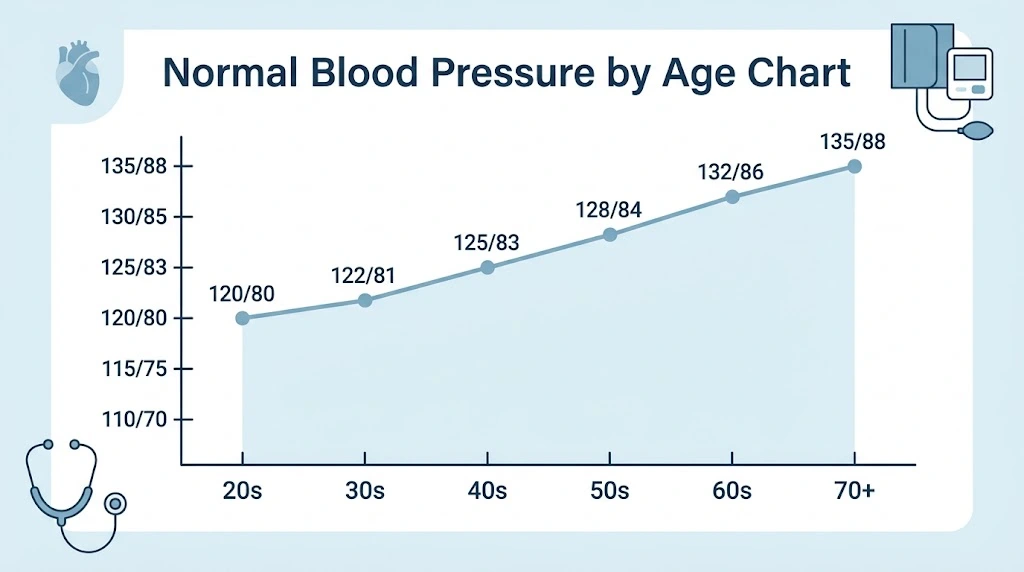
The Official Normal Blood Pressure by Age Chart
Medical experts use specific reference ranges to evaluate how well your heart handles daily demands. This reference table outlines the healthy systolic, diastolic, and pulse targets across every decade of life.
| Age Bracket | Healthy Male Target (mmHg) | Healthy Female Target (mmHg) | Target Resting Pulse (BPM) |
| 20 to 29 Years | 120/80 or lower | 110/75 or lower | 60 to 100 BPM |
| 30 to 39 Years | 122/81 or lower | 113/77 or lower | 60 to 100 BPM |
| 40 to 49 Years | 124/82 or lower | 116/79 or lower | 60 to 100 BPM |
| 50 to 59 Years | 128/83 or lower | 123/80 or lower | 60 to 100 BPM |
| 60 to 69 Years | 133/84 or lower | 130/81 or lower | 60 to 100 BPM |
| 70+ Years | 135/85 or lower | 134/83 or lower | 60 to 100 BPM |
Using a normal blood pressure by age chart gives you a clear snapshot of your vascular wellness. However, remember that individual targets may vary based on your personal health profile, genetics, and current medications.
What Does Normal Blood Pressure Mean Depending on Age and Gender?
Biological differences create unique blood pressure patterns between men and women throughout life. Hormones, muscle mass, and vascular size all influence how your blood flows.
What Is a Man’s Normal Blood Pressure by Age?
For younger and middle-aged men, readings tend to run higher than female peers due to arterial wall thickness and stress hormones. A reading of 124/82 is standard for men in their forties, while men past sixty often average around 133/84.
Cardiovascular strain in men often starts earlier in life. Regular monitoring helps men detect hypertension before it impacts kidney function or coronary arteries.
What Is a Woman’s Normal Blood Pressure by Age?
Young women generally enjoy lower readings thanks to the protective effects of natural estrogen. Estrogen keeps blood vessels pliable, often keeping numbers near 110/75 in early adulthood.
Once menopause begins, estrogen drops sharply, causing arterial stiffness to accelerate. By age 65, women often match or exceed male averages, making regular monitoring essential for post-menopausal heart safety.
What Does a 50–70 Year Old’s Normal Blood Pressure Look Like?
The decades between 50 and 70 represent a major turning point for your vascular system. Let us examine normal blood pressure by age during these crucial decades.
Cardiovascular Shifts: Ages 50, 51, and 55
When exploring what is normal blood pressure by age 50, a target of 120/80 remains ideal, but averages often rise to 125/82. Metabolic changes and work stress frequently cause numbers to drift upward.
By the time you review what is normal blood pressure by age 51, minor arterial hardening is already underway. Consistent tracking ensures these small changes do not escalate into chronic hypertension.
When checking what is normal blood pressure by age 55, typical readings reach 128/83 for men and 123/80 for women. Maintaining active daily habits during this window helps keep your vessels resilient.
Senior Years: Ages 60, 62, 65, 66, and 70
Doctors frequently accept readings up to 133/84 when considering what constitutes normal blood pressure by the age of 60. Large arteries lose flexibility, which causes the upper number to rise while the bottom number frequently starts to stabilize.
For adults assessing what is normal blood pressure by age 62, doctors evaluate overall averages rather than isolated spikes. Stress or poor sleep can temporarily elevate your readings on any single day.
A systolic range of 130 to 135 is considered acceptable when examining normal blood pressure for the ages of 65 and 66. Keeping your pressure in this zone protects brain circulation without causing lightheadedness.
Finally, knowing what is normal blood pressure by age 70 helps prevent accidental over-medication. Aggressively lowering systolic numbers below 120 in seniors can cause dangerous fainting spells. A safe target of 135/85 preserves steady blood flow to vital organs.
What Is Age-Related Normal Diastolic Blood Pressure?
The bottom number on your screen measures the baseline pressure inside your arteries when your heart rests between beats. While systolic pressure climbs throughout your life, diastolic pressure follows a different path.
Diastolic pressure typically increases until age 55 and then begins a steady decline. As large arteries stiffen, they lose their ability to sustain resting tension between contractions.
This widening gap creates what doctors call wide pulse pressure. If your diastolic number drops below 60 in later years, speak with your physician to ensure your coronary arteries receive adequate blood.
What Is Normal Blood Pressure and Pulse by Age?
Your resting pulse rate provides key insights into how efficiently your heart works alongside your blood pressure. While your blood pressure ceiling climbs with age, your resting heart rate should remain steady between 60 and 100 beats per minute.
A fit cardiovascular system delivers more blood per beat, resulting in a lower resting pulse. If you notice a high resting pulse paired with rising blood pressure, your heart may be under excessive strain.
Frequently Asked Questions
What is normal blood pressure by age for adult men?
For men under 40, a reading under 122/81 is standard. For men aged 50 to 60, healthy targets sit around 128/83, while men aged 65 and older typically range between 130/84 and 135/85.
What is normal blood pressure by age for adult women?
Young women usually average around 110/75 to 116/79. After menopause, female readings rise toward 123/80 at age 55 and reach approximately 134/83 after age 70.
What is normal blood pressure by age chart reading for seniors?
According to clinical charts, seniors aged 65 and older should aim for a systolic reading between 130 and 135 and a diastolic reading between 70 and 85 to prevent both stroke and fainting risks.
What is normal blood pressure by age 65 to 70?
A normal range for adults aged 65 to 70 is between 130/80 and 135/85. This range protects brain circulation while minimizing strain on delicate blood vessels.
What is normal diastolic blood pressure by age after 60?
After age 60, normal diastolic pressure generally ranges between 70 and 84 mmHg. A reading below 60 should be evaluated by a healthcare professional.
Smart Daily Habits for Healthy Blood Pressure
Keeping your blood pressure in a safe zone requires simple, consistent lifestyle habits:
- Walk briskly for 25 minutes every day to keep arterial walls flexible.
- Cut back on processed foods and limit daily sodium intake.
- Eat magnesium-rich leafy greens, bananas, and unsalted nuts.
- Practice slow deep-breathing exercises for ten minutes each evening.
- Take your readings at the same time each morning while sitting quietly.
Final Verdict
Understanding your cardiovascular numbers allows you to protect your long-term health. Blood pressure naturally shifts as you move through each decade, and your care routine should adapt alongside it.
Use these reference points to guide your daily habits, stay proactive, and partner with your doctor to keep your heart strong for life.