Mental Health & Productivity
How to Fix Your Sleep Cycle for Better Work Productivity
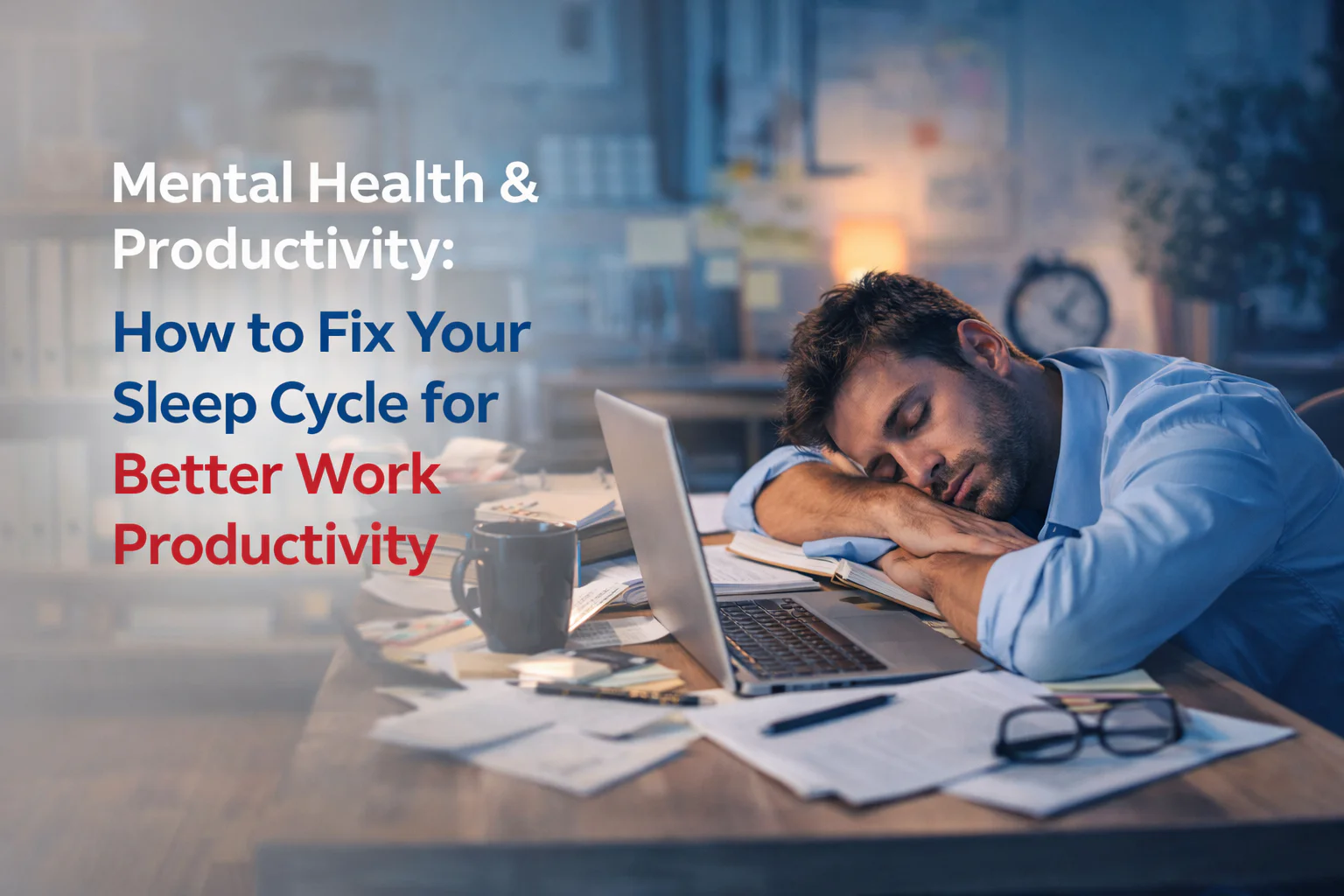
The Inextricable Link: Sleep, Mind, and Output
In the modern hustle culture, productivity is often worn as a badge of honor. We glorify the 5 a.m. wake-ups, the late-night grind, and the ability to function on minimal sleep. Yet, we overlook a fundamental truth: sustainable, high-quality productivity is not born from exhaustion; it is deeply rooted in mental well-being, and at the core of both lies one critical pillar—sleep.
The link between mental health, sleep, and productivity is an unbreakable chain. Poor sleep deteriorates mental resilience, heightens anxiety, and clouds cognitive function. This, in turn, sabotages our ability to work effectively, think creatively, and manage stress. Conversely, prioritizing sleep is a profound act of self-care that fuels emotional stability and sharpens professional output.
This article isn’t about adding more to your to-do list. It’s about strategic subtraction—removing the barriers to restorative sleep—so you can build a foundation for genuine, lasting productivity. We’ll explore the science, share personal and famous anecdotes, and provide a practical, step-by-step guide to fixing your sleep cycle for good.
The Science Simplified: Sleep is not a passive state; it’s an active, vital process for brain maintenance. During deep sleep, your brain clears out metabolic waste, consolidates memories, and processes emotional experiences. The REM (Rapid Eye Movement) stage is crucial for creativity and problem-solving. When you short-circuit this cycle, you impair cognitive functions, emotional regulation, and physical health.
A Personal Story: My Burnout Wake-Up Call
A few years ago, I was entrenched in the “busy” trap. Working in a fast-paced digital marketing role, I equated long hours with dedication. My routine was a recipe for disaster: blue-light exposure until midnight, anxious thoughts about deadlines keeping me awake, and relying on multiple alarm clocks to drag myself out of bed at 6 a.m.
My productivity was a façade. I was spending more hours at my desk but making more errors. My creativity dried up; I was reactive, not proactive. Simple tasks felt monumental. My mental health was fraying—I was snappy, perpetually overwhelmed, and felt a constant low-grade sadness.
The turning point was a minor project error that felt like a catastrophic failure. In that moment of tearful frustration, a mentor asked, “How are you sleeping?” I laughed bitterly. The truth was, I wasn’t—not really.
Committing to fix my sleep was my first step toward reclaiming my mental health and my professional competence. It wasn’t an overnight fix, but it was the single most effective “productivity hack” I’ve ever implemented.
Famous Face, Common Struggle: Arianna Huffington’s Transformation
You are not alone in this struggle. Some of the most celebrated high-achievers have battled the sleep-productivity paradox. Perhaps the most famous modern example is media mogul Arianna Huffington. In 2007, she collapsed from exhaustion, hitting her head on her desk and breaking her cheekbone. The cause? Severe sleep deprivation.
This became her pivotal wake-up call (literally and figuratively). She transformed her life, making sleep a non-negotiable priority. She later wrote the book The Sleep Revolution, championing the idea that to succeed, you need to sleep. Her productivity, creativity, and leadership, by her own account, improved dramatically. She shifted the narrative, proving that true power lies in being well-rested, not rundown.
The Sleep-Productivity Protocol: Your Action Plan
Fixing your sleep cycle is a systematic reset, not a random act of going to bed early one night. It requires consistency and a holistic approach. Here is your actionable blueprint to transform your sleep and supercharge your productivity.
| Aspect | The Problem | The Fix | Expected Productivity Benefit |
|---|---|---|---|
| Consistency | Irregular sleep/wake times confuse your internal body clock (circadian rhythm). | Fix your wake-up time (7 days/week). Go to bed when you feel sleepy. | More consistent energy, less morning brain fog, reliable daily start. |
| Light Exposure | Evening blue light from screens suppresses melatonin production; insufficient morning light weakens circadian drive. | Implement a digital sunset 1 hour before bed. Get 15 minutes of morning sunlight upon waking. | Improved mood, sharper focus throughout the day, easier sleep onset. |
| Bedroom Environment | A stimulating environment (bright, warm, noisy) prevents the onset of deep, restorative sleep. | Optimize for cool (60-67°F), dark, and quiet. Use your bed only for sleep and intimacy. | Deeper, more restorative sleep cycles. Enhanced memory consolidation and physical recovery. |
| Evening Routine | Going from work stress straight to bed keeps the mind active and anxious. | Create a 60-minute wind-down ritual (e.g., reading a physical book, light stretching, meditation). | Reduced nighttime anxiety, faster sleep onset, better emotional and stress recovery. |
| Diet & Exercise | Late caffeine/alcohol, heavy meals, or intense late exercise disrupt sleep architecture. | Caffeine curfew by 2 p.m. Light evening meals. Finish intense workouts 3+ hours before bed. | Stable energy levels, no afternoon crashes, improved metabolic health for sustained energy. |
| Mind Management | Work anxiety and tomorrow’s to-do list cause “psychic insomnia” and restless sleep. | Keep a bedside “brain dump” journal. Practice gratitude or positive visualization before sleep. | Clears mental RAM, reduces pre-sleep worry, fosters creative insights and problem-solving. |
FAQs: Your Sleep Cycle Questions, Answered
Here are detailed answers to the most common questions about resetting your sleep cycle for better mental health and productivity.
Yes, you can significantly shift your cycle. While you may have a genetic inclination, your circadian rhythm is remarkably adaptable. By rigorously following a consistent wake-up time (even on weekends) and getting bright morning light exposure, you can train your body clock. It requires discipline and may take 3-4 weeks for a lasting change, but it is entirely possible.
Do not lie there frustrated. The anxiety about not sleeping makes it worse. Get out of bed, go to a dimly lit room, and do something quiet and boring (like reading a mundane physical book—no screens). Return to bed only when you feel genuinely sleepy. This practice, called stimulus control, helps break the unhealthy association between your bed and anxiety.
Strategic naps can be beneficial if done correctly. They can boost afternoon alertness without sabotaging nighttime sleep. The key rules: 1) Keep it short (20-30 minutes max) to avoid deep sleep grogginess. 2) Nap before 3 p.m. so it doesn’t interfere with evening sleep drive. If you struggle with insomnia, it’s often better to avoid naps initially.
Most people notice subjective improvements in mood and daytime alertness within the first week. Objective cognitive benefits—like better focus, memory recall, and complex decision-making—typically become more pronounced after 2-3 weeks of consistent, quality sleep. The body and brain need time to repair and rebuild the deficits caused by sleep deprivation.
Absolutely. Challenging circumstances require adaptation, not abandonment. Focus on maximizing the factors you can control: perfecting your sleep environment (dark, cool, quiet), protecting your wind-down routine when possible, and communicating with family/partners to share responsibilities. Even incremental improvements in sleep quality and duration can yield meaningful benefits for mental health and productivity.
Sleep as Your Ultimate Productivity Strategy
Reframing sleep from a passive inactivity to an active, non-negotiable investment is the paradigm shift needed in our productivity-obsessed world. It is the ultimate leverage point. By fixing your sleep cycle, you are not being lazy; you are upgrading your biological hardware to run the complex software of work and life more effectively.
The journey I began after my burnout, similar to Arianna Huffington’s, taught me that the path to true achievement doesn’t run through a state of exhaustion. It runs through a state of restoration. When you are well-rested, you approach challenges with clarity instead of panic, creativity instead of conformity, and resilience instead of fragility.
Start tonight. Not with a drastic overhaul, but with one small, sustainable change. Perhaps it’s charging your phone in another room. Or committing to a consistent wake-up time tomorrow morning. Your mind, your work, and your overall well-being will thank you for it. In the quiet, dark sanctuary of a good night’s sleep, you are quietly building the most productive, healthy, and vibrant version of yourself.