7 Proven Knee Pain Relief Secrets Doctors Rarely Tell You
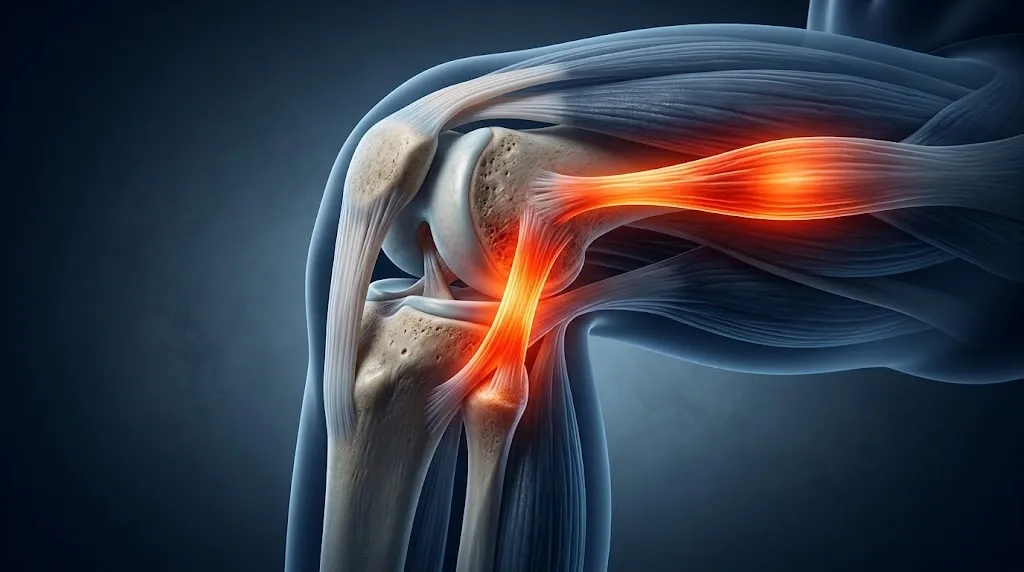
If you wince when standing up, dread climbing stairs, or feel that sharp twinge behind your knee every time you bend, you are not alone. The constant search for a quick fix is exhausting, and the fear of making it worse is real. But what if the solution isn’t just about taking another pill, but about finally understanding exactly where the pain is coming from and why?
Most people treat the symptom, not the source. This guide is different. We are breaking down the real mechanics of joint discomfort, from the dull ache on the inside of your leg to the sharp sting in the back, so you can stop worrying and start moving. You will discover specific stretches, the smartest way to use painkillers, and why your running shoes might be the enemy.
The Hidden Map: Decoding Your Knee Pain Location Chart
Before you can fix the problem, you need to decode the signal. Your body is precise; the exact location of the sting tells a completely different story. Using a mental “knee pain location chart” is the first step to a correct diagnosis.
If you are experiencing inner knee pain or medial knee pain, it often points to stress on the MCL (Medial Collateral Ligament) or a torn meniscus. This is especially common if you play sports that involve cutting or pivoting. On the flip side, lateral knee pain (pain on the outside) is the classic calling card of IT Band Syndrome, a constant companion for runners and cyclists.
What Causes Knee Pain in Females?
It is a myth that joint pain is gender-neutral. What causes knee pain in females is often biomechanical. Women typically have wider hips, which creates a sharper angle (Q-angle) at the knee. This increases the pull on the kneecap, leading to patellofemoral pain. Hormonal fluctuations can also affect ligament laxity, making women more prone to instability.
Back of Knee Pain: The Sneaky Culprit
Pain in back of knee when straightening leg is often a different beast entirely. This is usually a Baker’s Cyst (a fluid-filled swelling) or a hamstring tendon issue. If you feel pain behind knee when bending, you might be impinging a tendon or dealing with a meniscus tear in the posterior horn.
Bending, Squatting, and Walking: Why Basic Movements Hurt
Does knee pain when bending ruin your day? You are fighting friction. When the cartilage under your kneecap softens (chondromalacia), the simple act of bending to pick up a pen becomes a grinder.
Knee pain when squatting is almost always a form issue or a strength imbalance. If your glutes are asleep, your knees dive inward, putting brutal stress on the inner joint. Similarly, knee pain when straightening leg usually implicates the patellar tendon, which sits just below the kneecap.
The Runner’s Dilemma
Knee pain after running or knee pain when running is rarely about the knee itself. It is usually about the load. Increasing mileage too fast, or running in worn-out shoes, shifts the impact up the chain. If you have pain in back of knee when walking, check if your stride is too long; overstriding forces the hamstring to work overtime just to stabilize you.
The Medical Side: ICD-10 Codes and Treatment Protocols
If you are seeing a doctor, you will likely hear a string of numbers. This is the International Classification of Diseases (ICD-10). It helps insurance companies and specialists speak the same language.
Here is the quick breakdown for documentation:
| Condition | ICD-10 Code |
| Right knee pain | M25.561 |
| Left knee pain | M25.562 |
| Unspecified knee pain | M25.569 |
Knowing whether you need the right knee pain icd 10 or the left knee pain icd 10 code is essential for physical therapy approvals. It ensures that your treatment plan is mapped to the correct side of the body.
What is the Best Painkiller for Knee Pain?
When the throbbing is unbearable, you need relief now. The “best” is subjective, but usually breaks down like this:
- NSAIDs (Ibuprofen/Naproxen): Great for inflammation and swelling.
- Acetaminophen: Better for general pain signaling but does nothing for swelling.
- Topical Gels (Voltaren): Localized relief with fewer stomach issues.
Movement is Medicine: Stretches and Exercises for Knee Pain
The instinct to rest and immobilize a sore joint is strong, but it is often wrong. Motion is lotion. Stretches for knee pain should focus on the muscles above and below the joint, not just the knee itself.
The Power Quad Stretch
If you have inside knee pain, your quadriceps are likely pulling the kneecap out of alignment.
- Stand holding a wall.
- Pull your heel in the direction of your glute while holding onto your ankle.
- Hold for 30 seconds. The front of your thigh should start to relax.
Glute Bridges for Stability
If knee pain when walking is your issue, your hips are weak.
- With your feet flat and your knees bent, lie on your back.
- Lift your hips and contract your glutes until your body forms a straight line.
- This takes the load off the knee joint and puts it where it belongs—on the muscles.
How to fix knee pain often involves trusting the opposite muscle group. If the back hurts, stretch the front; if the front hurts, strengthen the back.
Sciatica and Referred Pain
Here is a truth that surprises many patients: Can sciatica cause knee pain? Absolutely. The sciatic nerve runs down the back of the leg. If it gets pinched in the lower back, it can send a phantom pain signal directly to the knee.
This is why how to relieve knee pain sometimes requires checking your back. If your knee feels fine to the touch, but deeply aches, and you have a history of lower back stiffness, the knee is simply the messenger. You need to treat the spine, not the joint.
How to Get Rid of Knee Pain: A Daily Action Plan
What to do for knee pain depends on how quickly you want results. Here is a tiered approach:
- Immediate: Ice the area for 15 minutes.Elevate the leg above your heart.
- Short-Term: Modify your activity. If you run, swim. If you squat, do leg extensions. Stop doing the one thing that triggers the pain.
- Long-Term: Invest in your footwear. Supportive shoes are non-negotiable for lateral knee pain and pain bending knee.
How to Help Knee Pain at Night
If knee pain when bent wakes you up, do not sleep in the fetal position. Place a pillow between your knees. This keeps the top leg aligned with the hip, reducing the torsion on the knee.
Frequently Asked Questions
How quickly can knee pain be relieved at home?
The RICE method is king for immediate relief. Rest the leg, Ice for 20 minutes on/off, apply a Compression bandage (not too tight), and Elevate the leg above your heart. This reduces the inflammatory response that causes stabbing pain.
Why does my knee hurt when I bend it but not when I walk?
This is a classic sign of patellofemoral syndrome or a meniscus issue. Walking keeps the leg straight, avoiding the compression. Bending engages the kneecap against the femur bone, causing friction and pain.
Can I still run with inside knee pain?
No. Inside knee pain that is sharp indicates strain on the MCL or meniscus. Running on it will only worsen the tear. Switch to low-impact cardio like swimming or biking until you are pain-free for at least a week.
How can I determine whether my knee discomfort is severe?
If you cannot bear weight on the leg, the knee locks up and won’t straighten, you have a fever, or the joint is visibly deformed (swelling is okay, deformity is not), you need to see a doctor immediately. Do not try to stretch a locked knee.
Is walking good for knee pain?
Yes, with nuance. Walking is excellent for knee pain relief because it lubricates the joint. However, if you have pain behind knee when walking, you may need to shorten your stride. Walk on flat surfaces before attempting hills.
What does medial knee pain indicate?
Medial knee pain typically indicates a sprain of the MCL or a tear of the medial meniscus. It is common in older adults (degenerative) and younger athletes (traumatic).
Why is knee pain worse at night?
During the day, your body is moving and pumping fluid. At night, the joint stiffens, and inflammation pools. Also, the lack of distraction (like TV or work) makes the brain hyper-aware of the pain signals.