Where Is Gallbladder Pain Felt? 15 Signs You Should Never Ignore
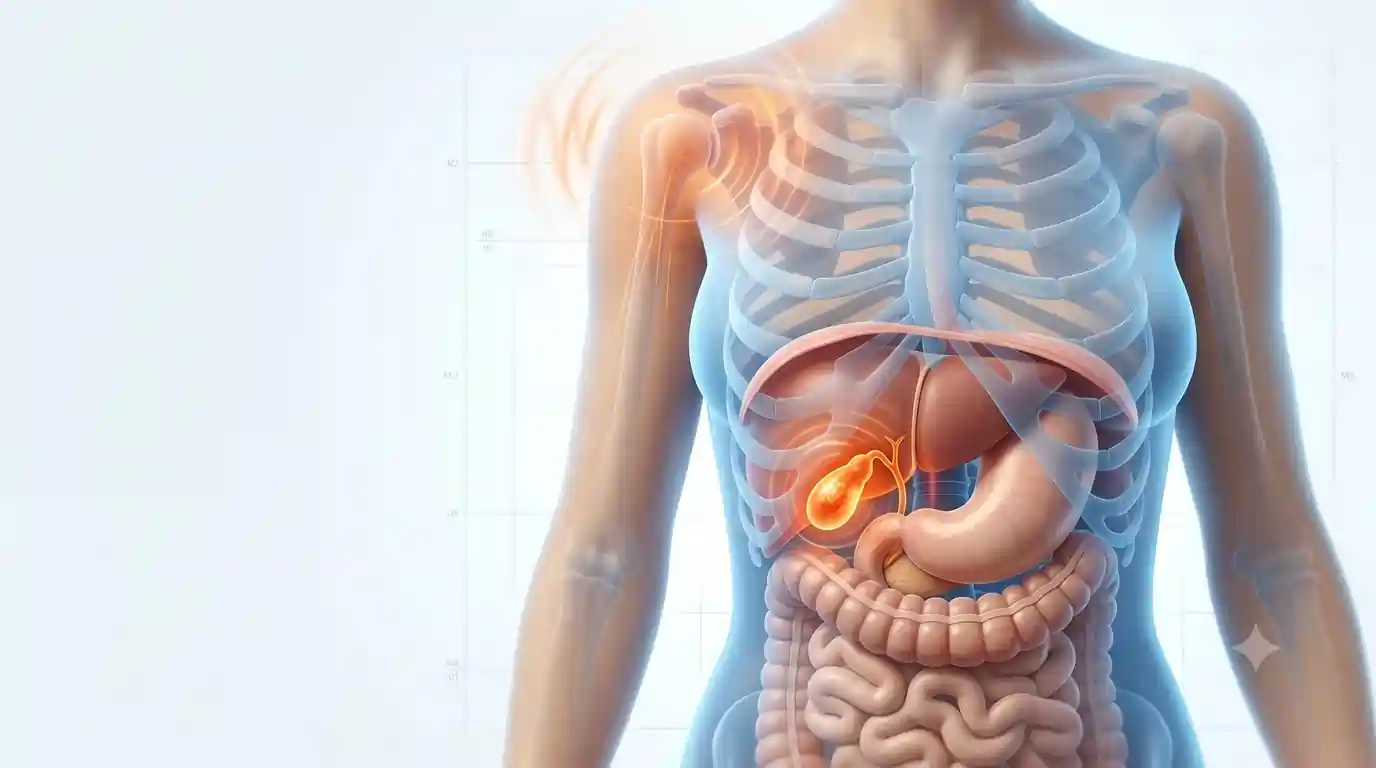
You finish a heavy meal. Within an hour, a gnawing ache builds under your right ribs. It might stretch into your back or shoulder blade. You try shifting positions, but the pressure won’t quit. This isn’t ordinary indigestion. Your body is sending a distress signal directly from your gallbladder.
Ignoring it can lead to serious complications. This page maps out the exact locations, distinct sensations, and safe relief methods you need right now, backed by clinical research and anatomical science.
Complete Gallbladder Pain Location Guide (Quick-Reference Table)
Knowing the precise spot helps you distinguish a gallbladder attack from gas or muscle strain. Use this visual breakdown to map your symptoms.
| Pain Zone | Sensation & Timing | What It Often Means |
| Right Upper Quadrant | Deep, cramping pressure or sharp stab; worsens after fatty meals | Classic acute cholecystitis or gallstone obstruction |
| Right Shoulder Blade | Dull, referred ache behind the scapula; constant when severe | Irritation of the phrenic nerve from an inflamed gallbladder |
| Center of Abdomen (Epigastric) | Gnawing, burning pain mistaken for ulcer or heartburn | Distension of the bile duct before pain localizes to the right |
| Right Side or Flank | Radiating ache that wraps around the rib cage toward the back | Stone migration or bile flow backup causing muscular guarding |
| Chest (Right Side) | Pressure mimicking angina; occurs after eating | Gas distension pushing upward on the diaphragm |
Where Is Gallbladder Pain Felt? The Anatomical Map
Your gallbladder nestles beneath your liver in the upper right segment of your abdomen. When it malfunctions, the pain signature follows a predictable but often surprising path. Most people report an initial discomfort directly under the right rib cage, roughly where a bra band sits on a female. This doesn’t stay put.
The pain frequently travels. Phrenic nerve irritation sends signals to the right shoulder blade and upper back. A distended, stone-filled gallbladder can press on the diaphragm, causing right-sided chest tightness.
You might also feel a deep, boring ache in the middle of your stomach, just below the breastbone. This midline epigastric pain explains why many emergency room visits for gallbladder attacks get misdiagnosed as heartburn or a heart attack initially.
If your pain radiates to the left side, seek immediate evaluation; though less common, pancreatic involvement can shift pain across the upper abdomen.
Female Gallbladder Pain Location: Why It Differs
Women face triple the gallbladder issues compared to men. Estrogen and progesterone fluctuations thicken bile and slow gallbladder emptying. Pregnancy, hormone replacement therapy, and oral contraceptives amplify the risk.
Female gallbladder pain location often mimics reproductive or digestive disorders. A woman might describe the ache as:
- A band squeezing directly below the right bra line.
- Pain radiating to the mid-back that worsens premenstrually.
- Nausea and vomiting that gets dismissed as “bad PMS” or food poisoning.
- Severe bloating and upper abdominal pressure mistaken for ovarian cyst pain.
Because female cardiac symptoms also present atypically, never dismiss new upper abdominal or back pain. Physicians note that gallbladder attacks in females often start during the night, waking them from sleep exactly two to three hours after a high-fat dinner.
What Does Gallbladder Pain Feel Like? The Sensation Profile
This isn’t a subtle twinge. Gallbladder pain attacks with a mechanical, squeezing quality that forces you to move—but no position helps. Patients describe it as a hand gripping their insides and twisting slowly. The pain builds in waves, peaks for 30 to 60 minutes, then gradually deflates, leaving a residual deep soreness under the ribs.
A stone-attack creates an obstructive, colicky pattern: sharp cramping that peaks and vanishes as the stone shifts. True inflammation (cholecystitis) produces an unrelenting, hot, throbbing ache that worsens with any movement, cough, or deep breath.
The common thread? An intolerance to pressure. Pressing the area under the right ribs during an episode feels impossible—doctors call this Murphy’s sign, a classic bedside test.
Gallbladder Pain Symptoms: Beyond the Ache
Pain dominates the picture, yet other gallbladder pain symptoms whisper trouble beforehand.
- Nausea and Vomiting: Bile backup triggers the vomiting center. Relief rarely follows.
- Sweating and Chills: Suggests infection setting in. Rigors signal an emergency.
- Clay-Colored Stools: Lack of bile pigment turns stool pale. Dark, tea-colored urine accompanies this.
- Jaundice: Yellow eyes or skin mean a stone has lodged in the common bile duct.
- Fatty Food Intolerance: Diarrhea or cramping within 30 minutes of eating fried or creamy foods.
- Excessive Belching: Aerophagia and trapped gas from impaired fat digestion.
What Causes Gallbladder Pain? The Mechanism Explained
The primary culprit: gallstones. Cholesterol stones form when bile contains too much cholesterol and not enough bile salts. Pigment stones develop from excess bilirubin.
Primary Triggers of Attack
- Dietary Fat Intake: A greasy meal causes the production of cholecystokinin, which forcefully squeezes a gallbladder loaded with stones.
- Prolonged Fasting: Bile sits stagnant, concentrating and crystallizing into sludge.
- Rapid Weight Loss: The liver secretes excess cholesterol into bile during extreme calorie deficits.
- Obesity and Metabolic Syndrome: Insulin resistance alters bile composition.
- Biliary Dyskinesia: The gallbladder fails to eject bile properly even without stones present.
Functional gallbladder disorder explains pain in patients whose ultrasounds return clear. The ejection fraction measures below 35% on a HIDA scan, confirming the organ acts as a lazy, non-functional pouch causing chronic right side gallbladder pain.
Does Gallbladder Pain Come and Go? Understanding Attack Cycles
Yes, and this pattern misleads sufferers into postponing treatment. Biliary colic arrives abruptly and departs slowly. A stone obstructs the cystic duct, the wall spasms against the blockage, and pain escalates. Once the stone falls back or passes, pain vanishes completely. You feel fine between episodes.
These pain-free intervals create false security. Each attack inflicts micro-damage. Repeated inflammation scars the wall, reducing function and setting the stage for a lodged stone emergency. Track how frequently your episodes occur. Moving from monthly to weekly attacks indicates stone migration and impending complications.
How to Relieve Gallbladder Pain: Fast, Evidence-Based Relief
When pain strikes at 2 a.m., these immediate interventions help stabilize you until medical assessment.
Immediate Relief Protocols
- Heat Application: Place a hot water bottle or heating pad directly over the upper right abdomen. Heat relaxes the smooth muscle spasm in the duct.
- Magnesium Supplementation: Magnesium malate or glycinate (400–600 mg) acts as a natural muscle relaxant, easing ductal spasm.
- Peppermint Oil Capsules: Enteric-coated peppermint oil contains menthol, a calcium channel blocker that relaxes biliary smooth muscle.
- Apple Cider Vinegar Compress: Soak a cloth in warm, diluted raw apple cider vinegar and apply to the right rib area. The acetic acid absorption is minimal, but the warmth and local irritant shift can ease referred pain signals.
- Positioning: Place a pillow beneath your right flank while lying on your left side.This uses gravity to shift the gallbladder downward, potentially dislodging a small stone.
- Hydration: Sip warm water. Dehydration thickens bile further.
Critical Warning: The fastest relief for an infected, obstructed gallbladder remains emergency cholecystectomy. If pain persists beyond five hours or fever spikes, go directly to the emergency department.
Can Gallbladder Pain Come and Go Years After Removal?
Post-cholecystectomy syndrome affects up to 15% of patients.”Years after gallbladder removal, why do I still have pain?”remains a top clinical question.
Culprits of Post-Surgical Pain
- Sphincter of Oddi Dysfunction (SOD): The muscular valve where bile enters the duodenum spasms, mimicking the original pain precisely.
- Retained Bile Duct Stones: Small stones missed during surgery or formed post-operatively within the duct.
- Biliary Sludge Recurrence: The liver still produces bile; sludge can accumulate and obstruct the common duct.
- Phantom Organ Pain: Neurological imprinting causes the brain to map midline discomfort as the old gallbladder location.
You must differentiate scar tissue adhesions from SOD. A gastroenterologist can perform an MRCP or ERCP to visualize the biliary tree. For pain where the gallbladder was removed years ago, a low-fat diet and antispasmodic medications often break the cycle without invasive retreatment.
Does Pooping Help Gallbladder Pain? The Gut-Biliary Link
A bowel movement might reduce bloating pressure but rarely resolves a true gallbladder attack. The bile duct and colon sit near each other; severe colonic distension from constipation can press on the hepatic flexure, mimicking or amplifying gallbladder pain.
Emptying the colon can reduce that extrinsic pressure, but it doesn’t treat a stone lodged in the cystic duct. If your pain consistently eases after defecation, the root cause may be large-intestinal gas rather than biliary disease. A food-symptom diary helps your doctor distinguish the two.
How to Sleep with Gallbladder Pain: Positioning Strategy
Sleep disruption becomes exhausting during a flare. Alter your sleeping biomechanics to minimize ductal tension.
- Left Lateral Decubitus: Sleeping on your left side reduces pressure on the liver and gallbladder, allowing bile to drain without gravitational resistance.
- Elevated Torso: Use a wedge pillow to keep the upper body inclined at 30 degrees. This prevents reflux and bile pooling.
- Pillow Support: Place a small cushion under the right ribcage to reduce skin and muscular stretch.
- Avoid Back Sleeping: Supine position allows the weight of the liver to compress an inflamed gallbladder, increasing nocturnal pain.
Gallbladder Pain Relief: Long-Term Management Strategy
Rescue methods help tonight. Prevention stops the next attack. You can change the trajectory of gallbladder health through consistent, daily actions.
Dietary Precision
| Avoid Completely | Safe & Therapeutic Alternatives |
| Fried meats, heavy gravies, butter | Lean proteins, olive oil, avocado (small portions) |
| Whole milk, cream sauces, cheese platters | Oat milk, low-fat yogurt, nutritional yeast |
| Lard, shortening, palm oil | Almond flour baking, air-fryer cooking |
| Egg yolks in large quantities | Egg white omelets with vegetables |
| Refined sugar, pastries, soda | Stevia, whole fruit, dark chocolate (85%+) |
Supportive Supplements & Botanicals
- Milk Thistle (Silymarin): Enhances liver detoxification and reduces bile cholesterol saturation.
- Beetroot: Betaine thins bile, promoting smoother ejection.
- Taurine: Conjugates bile acids, improving cholesterol solubility.
- Dandelion Root: Mild choleretic that stimulates healthy bile flow without violent contraction.
Frequently Asked Questions About Gallbladder Pain
Where is gallbladder pain located specifically?
Medical anatomy charts locate it in the right upper quadrant, just below the ribcage. Patients feel it as a deep, boring pressure at the base of the right ribcage that can penetrate straight through to the back around the level of T8-T9 vertebrae.
What does gallbladder pain feel like compared to gas?
Gas causes sharp, shifting jabs that release with movement or belching. Gallbladder pain produces a deep, unrelenting cramping that doesn’t ease with passing wind. A heavy, dragging sensation persists beneath the right ribs.
How does female gallbladder pain location differ from male?
Female gallbladder pain location frequently appears higher, tucked under the breast tissue and radiating into the shoulder blade. Hormonal bile thickening in females often causes a more diffuse abdominal pain pattern that can imitate menstrual cramping or ovarian discomfort.
Where is gallbladder pain felt in back specifically?
It concentrates beneath the right shoulder blade, medial border. Some describe it as a hot poker lodged between the spine and shoulder blade. Radiculopathic gallbladder pain can wrap around the right rib cage to the thoracic spine.
Can gallbladder cause chest pain?
Yes.Substernal pressure is produced when the enlarged gallbladder presses up against the diaphragm.Patients often describe a squeezing sensation that radiates to the right pectoral area, not the left arm typical of cardiac angina. Always rule out cardiac causes in an emergency setting first.
How quickly can gallbladder discomfort be relieved at home?
Apply moist heat directly over the upper abdomen while lying on the left side. This combination relaxes duct spasm and shifts stone position. Simultaneously sip hot water with magnesium powder if available. This buys time; it does not treat the cause.
When to Seek Emergency Intervention
Time is tissue. Certain symptoms demand an immediate 911 call or emergency room visit.
- Unrelenting pain longer than five hours.
- Fever above 100.4°F with chills.
- Jaundiced skin or yellowed eye whites.
- Vomiting that prevents keeping water down.
- Dark urine and clay-colored stool simultaneously.
Delaying care risks a perforated gallbladder, sepsis, or necrotizing pancreatitis. Prompt surgical consultation saves lives. Modern laparoscopic surgery requires only small incisions and often sends patients home the same day.